France
Paris
Where old and new share a block
Always new, and you'll miss it
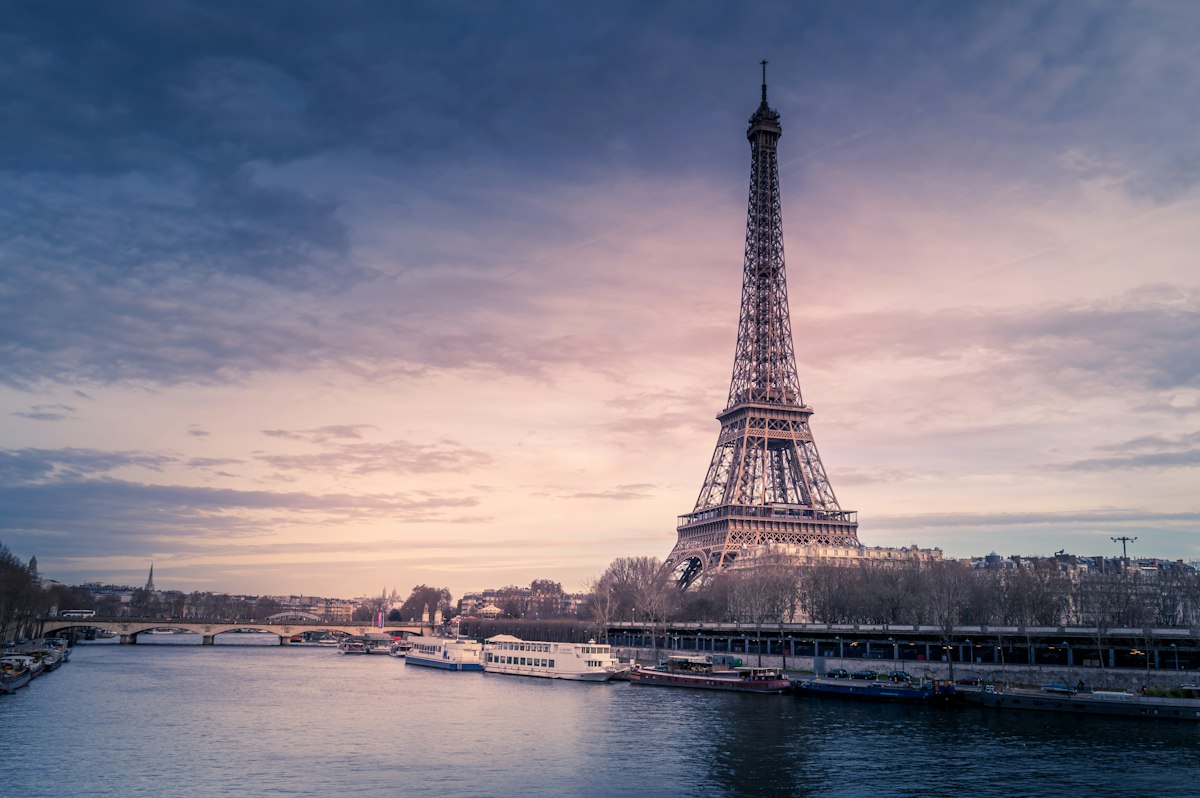
Paris is proof that one city can hold a whole lifetime. Hemingway called it a feast that follows you for the rest of your life (A Moveable Feast), and once you're there, you realize that's no cliché. Museums, food, walks, romance: whichever word you start with, the city hands you a day's worth of answers.
The feel of the city — layers of time
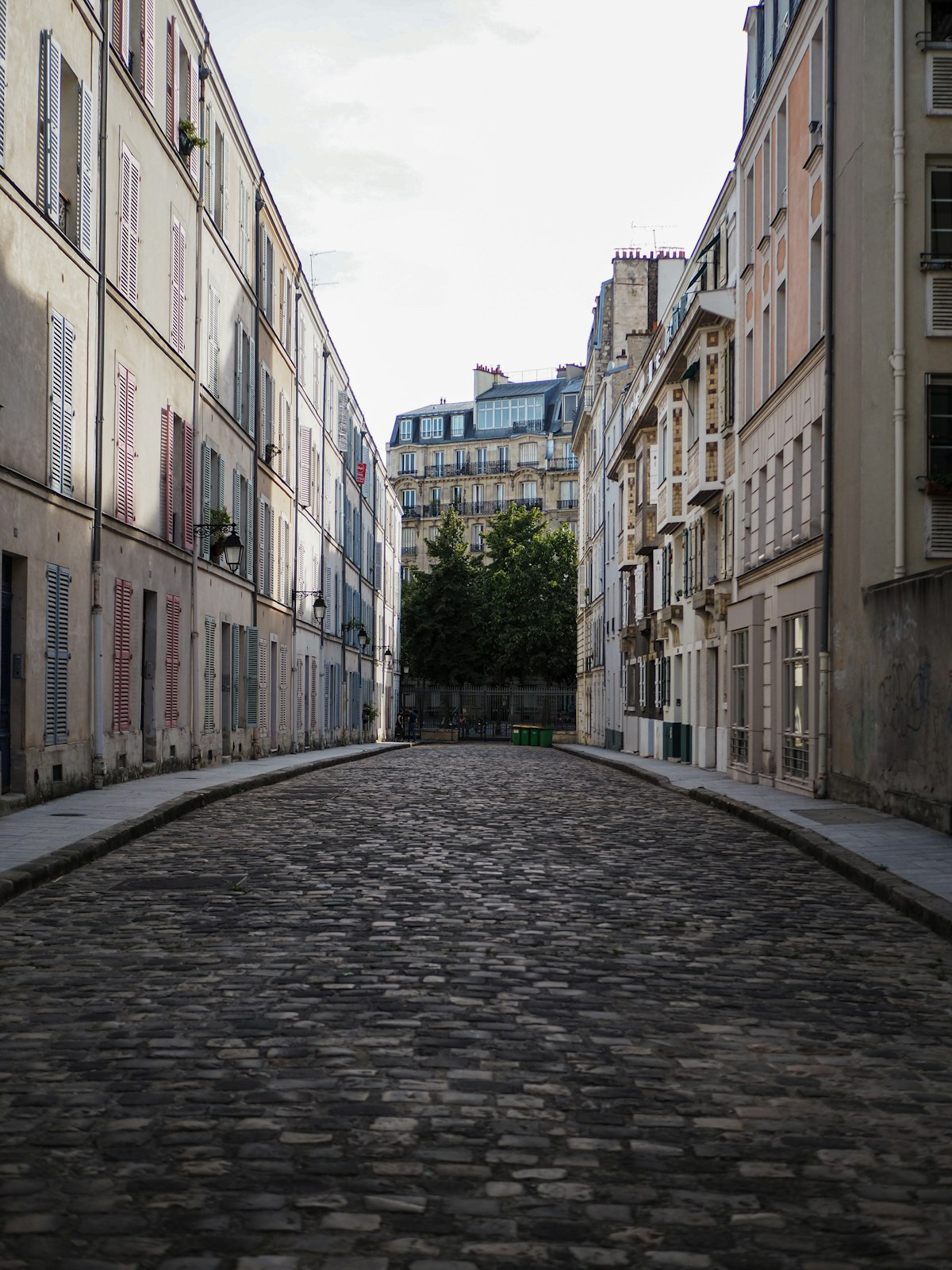
When you first arrive in Paris, the word that keeps coming to mind is depth. The stone on the building fronts is 200 to 300 years old, and the paving stones in the streets are older still. There are hardly any new buildings, so the whole city still looks just as it did in the late 19th century. That look was set by Baron Haussmann's rebuilding of Paris between 1853 and 1870, and it has held ever since. The metro opened in 1900, and its oldest line is Line 1. The cars are narrow, the stations small and the transfers confusing, but that's all part of the Paris mood. Noticing how each station's design differs just slightly is part of the fun. The city is divided into 20 arrondissements that spiral out like a snail shell, from the 1st at the center to the 20th on the edge. It's one city, but each arrondissement has a completely different feel, so where you stay shapes how you'll remember the trip.
Museums — a semester of art history
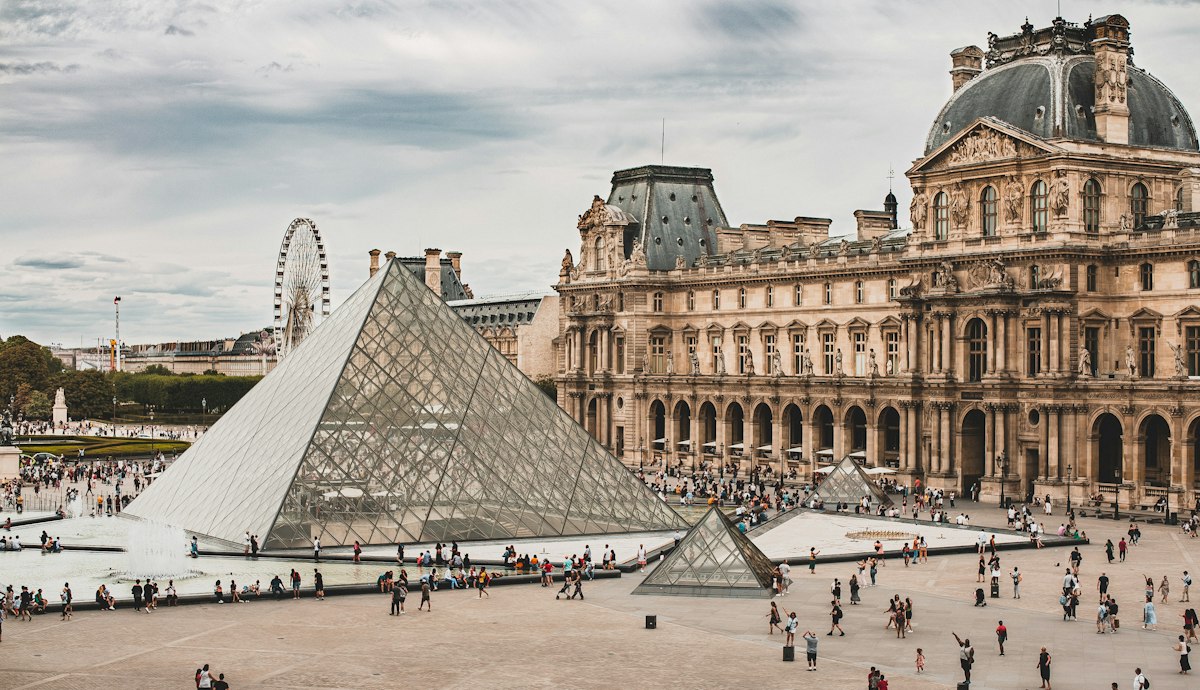
Paris is a city of art museums. See just the three key ones and you've as good as completed a semester of Intro to Art History. The Louvre — the world's largest art museum. The Mona Lisa, the Venus de Milo and the Winged Victory are the headliners, but the real draw is the sheer volume: four hours in, you still won't have seen it all. Admission is €32 (€22 for EEA residents and citizens), and the Paris Museum Pass is accepted. Closed Tuesdays. Musée d'Orsay — an Impressionist museum in a converted train station, with works by Monet, Renoir, Van Gogh and Degas from 1850 to 1910. The view of Paris through the clock window on the fifth floor is the shot everyone comes for. Musée de l'Orangerie — eight of Monet's Water Lilies panels wrap 360 degrees around two oval rooms. It's a small museum, but sit with them for an hour and you'll be completely drawn in. Centre Pompidou — a modern art museum whose exterior is covered in brightly colored pipes. It closed for renovation on September 22, 2025, though, and aims to reopen in 2030. The Paris Museum Pass (2, 4 or 6 days for €85, €105 or €125) is the most efficient option: entry to more than 50 museums and monuments, with a timed reservation required at some.
Paris, neighborhood by neighborhood
Every Paris neighborhood has its own distinct character, and the arrondissement you stay in changes how the trip feels. 1st and 4th (Île de la Cité, the Marais) — Notre-Dame, Sainte-Chapelle and the lanes of the Marais. The most classic part of town, with plenty of great photo spots. For a first trip to Paris, this is the place to start. 7th (Eiffel Tower, Orsay) — lots of hotels with a straight-on view of the Eiffel Tower. The classic photo spot is Place du Trocadéro (in the 16th), facing the tower head-on. 8th (Champs-Élysées, Arc de Triomphe) — the luxury boutique strip, with the Arc de Triomphe rising at the end of one long, straight avenue. 5th and 6th (Latin Quarter, Saint-Germain) — bookshops, cafés and the Sorbonne. Hemingway's regular cafés, Les Deux Magots and Café de Flore, are here. 18th (Montmartre) — the Sacré-Cœur basilica and the painters' square. The café from the film Amélie, Café des Deux Moulins, is here too. 3rd and 11th (République, Bastille) — indie, trendy and hip. Come here if you want to see the newer side of Paris.
Food — good wherever you eat
The real joy of eating in Paris is how high the everyday standard is at neighborhood bakeries and bistros. A Michelin meal is lovely, but a bistro lunch down a side street often leaves the stronger memory. Croissants and pains au chocolat — Du Pain et des Idées (10th), Cyril Lignac (several locations), Poilâne (6th). The flaky layers and aroma of a croissant fresh from the oven are a world apart from pastries elsewhere. Bistro classics — Le Comptoir du Relais (6th), Bouillon Pigalle (18th, the best value around), Chez Janou (3rd). Steak frites, a glass of wine and a crème brûlée come to €30–40 a meal. Macarons — Ladurée and Pierre Hermé are the two big names. Ladurée is classic, Pierre Hermé is modern. Pierre Hermé's signature is the Ispahan macaron (raspberry, lychee and rose). Michelin — Septime (11th, one star) or L'Astrance (16th, one star) runs €100–200 a meal, but either could be one you remember for years. Book one to two months ahead. For a final sweet, pick up an éclair or a tarte au citron from a neighborhood boulangerie. They're €4–6 each.
The Eiffel Tower and the Seine — the city's signature
The Eiffel Tower looks different from every angle: the massive iron frame up close, the head-on view from Place du Trocadéro, its profile from the Seine bridges, the whole city around it from Tour Montparnasse. Your camera roll just keeps growing. On the hour, every hour after sunset, the tower sparkles for five minutes; the last sparkle is at 11 p.m. Grab a spot at Trocadéro or along the Seine five minutes before it starts. A Seine cruise shows you the city from another angle. Bateaux Mouches and Vedettes du Pont-Neuf are the classics: one hour for €15–20. Sunset sailings have the best views. Dinner cruises run €100–200. Don't skip a walk across the bridges, either: Pont Alexandre III (the most ornate), Pont Mirabeau and Pont Neuf (the oldest).
Day trips — Versailles and Mont-Saint-Michel
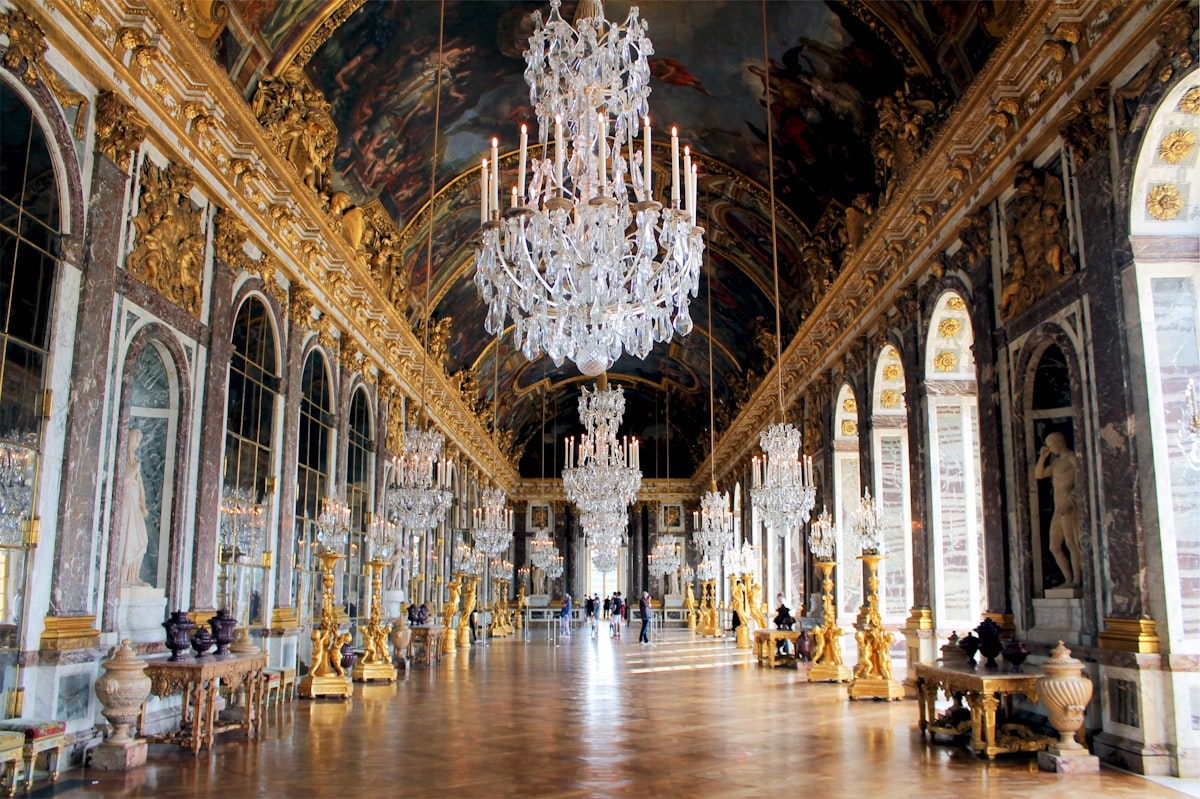
If you're in Paris for five days or more, it's worth fitting in one or two trips out of town. Versailles — 35 minutes on the RER C, and the closest palace to the city. Home to the French royal court from 1682 to 1789. With the Hall of Mirrors and the gardens and park (about 800 hectares), plan on half a day to a full day. There are fountain shows every Saturday and Sunday from early April to early November (plus Tuesdays in May and June). Mont-Saint-Michel — 2 hours by TGV, then 1 hour by shuttle bus, so 3 hours in all. An old abbey that seems to float on the sea. An overnight stay is the way to do it. The illuminations after sunset are the real highlight. Giverny — 1 hour by car, or train plus shuttle. Monet's house and garden, with the real pond from the Water Lilies paintings. Open April to October only; wisteria season in May is the peak. Loire Valley château tour — 2 to 3 hours by car. Fairy-tale castles such as Chambord and Chenonceau. Popular with families.
Suggested 7-day itinerary (6 nights)
Day 1 — Arrive in Paris (evening) → hotel check-in → evening walk to see the Eiffel Tower lit up Day 2 — Louvre in the morning → bistro lunch in the Marais → Notre-Dame, Île de la Cité and Sainte-Chapelle → Seine dinner cruise Day 3 — Orsay and Orangerie → lunch in the Latin Quarter → Luxembourg Gardens → café in Saint-Germain Day 4 — Montmartre (Sacré-Cœur) → lunch at the Amélie café → shopping at Galeries Lafayette → Opéra Garnier Day 5 — Day trip to Versailles → back in town → Champs-Élysées and Arc de Triomphe by night Day 6 — Free time in the Marais + vintage shopping → farewell Michelin dinner Day 7 — Hotel check-out → one last bakery stop + macarons → airport
- Best season
- Apr–Jun, Sep–Oct
- Recommended length
- 5–7 days
What to eat
- Croissants and pains au chocolat
- Steak frites
- Macarons (Ladurée, Pierre Hermé)
- Bistro prix-fixe menu
Handy tips
- For museums, the Paris Museum Pass (2, 4 or 6 days) is the most efficient way in.
- The Eiffel Tower looks its best from Place du Trocadéro, and photos turn out great there, too.
- Pay by card rather than cash, and in pickpocket hot spots (the Champs-Élysées, the metro) keep your bag in front of you.
Book
We are not party to bookings. Provider terms govern bookings/payments/refunds. We earn commission on our link bookings.