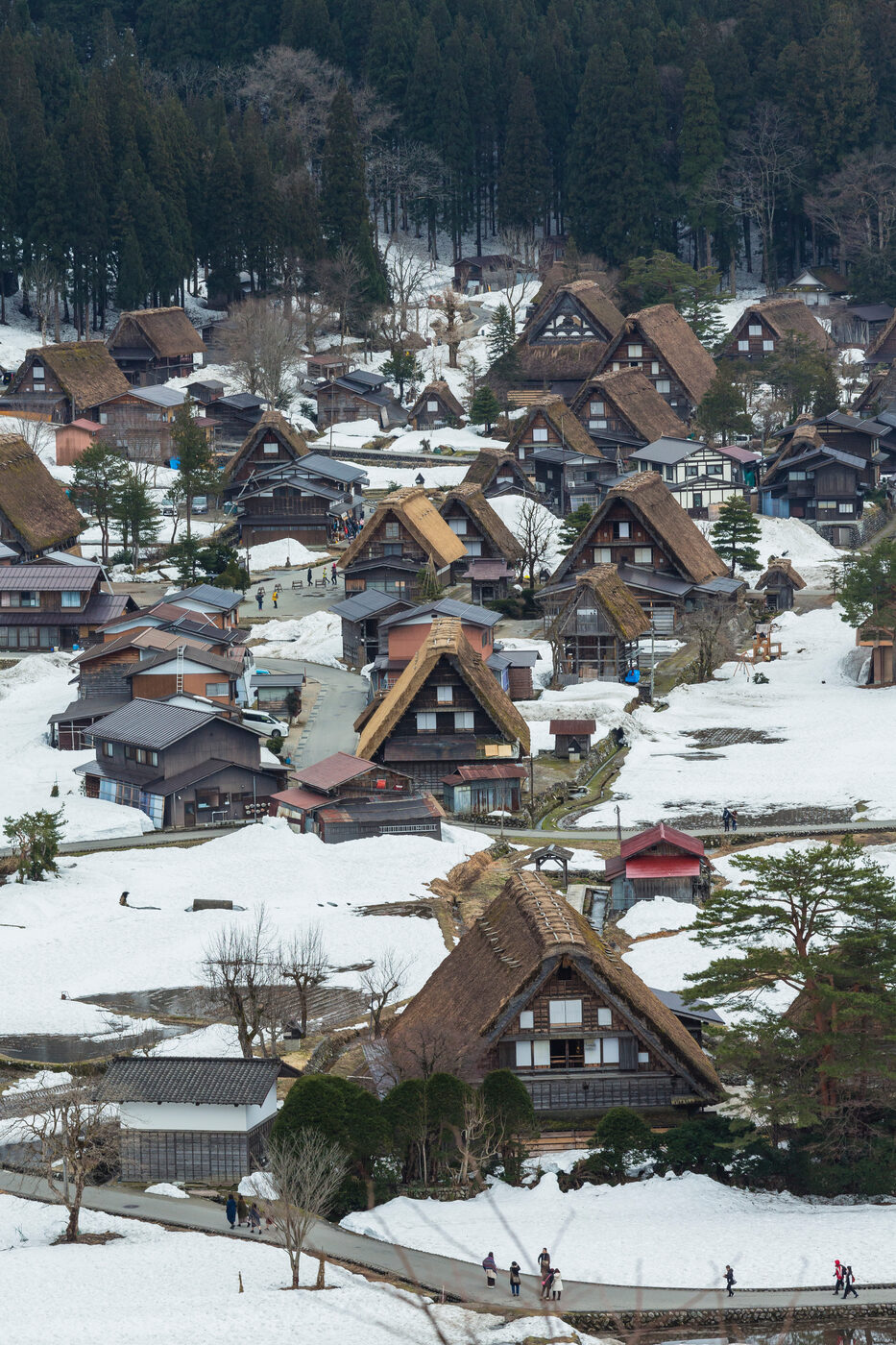
Another bite of Osaka: a kuidaore eating tour
Why kuidaore (食い倒れ, 'eating yourself into ruin') is practically the city's motto.
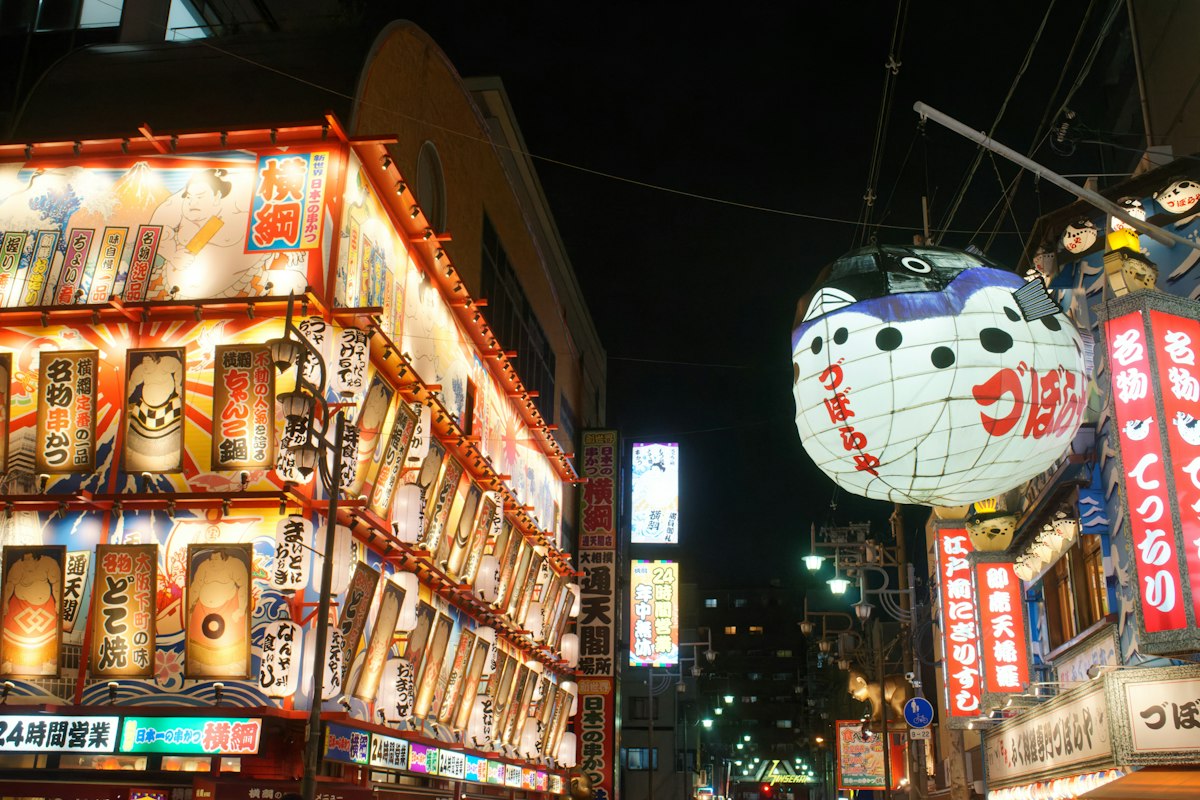
Osaka eats differently from Tokyo or Kyoto. Think bold flavors rather than a carefully polished meal, and noisy restaurants rather than small places. Instead of eating everything at one stop, try hashigo (梯子): a short visit to several different restaurants.
The city that eats itself broke
An old saying goes, "Kyoto ruins itself on clothes, Osaka on food." Kuidaore means spending so freely on eating that you bankrupt yourself, and Dotonbori is where the idea lives. Work on the canal began in 1612 under a man named Doton and was finished in 1615; by 1662 its banks held six kabuki theaters and five bunraku theaters. The theaters have long since given way to restaurant signs, crowded edge to edge.
Kuidaore Taro, the drum-beating mechanical clown, has greeted passersby since 1950. The restaurant he fronted closed in July 2008, but Taro stayed on as the face of the street. Across the canal, the arms-raised Glico runner first went up in 1935; the current LED sign, installed in 2014, is the sixth version.
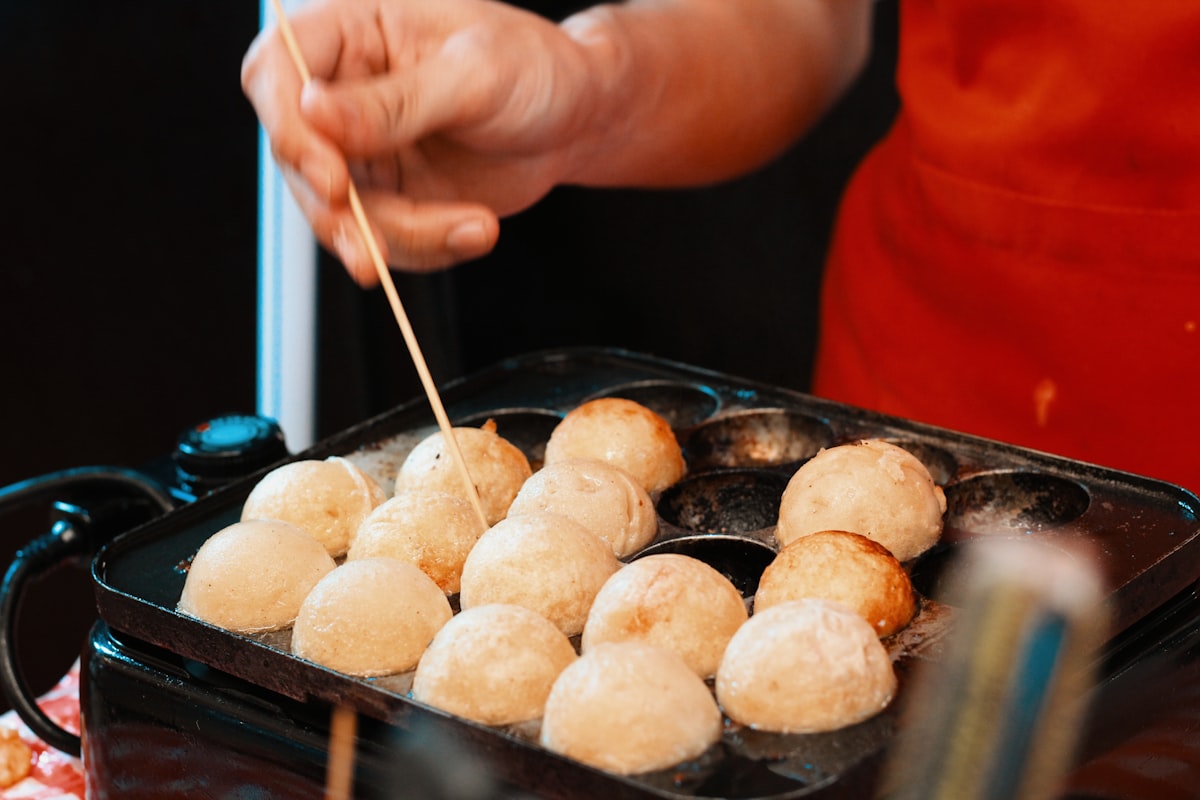
1. Takoyaki
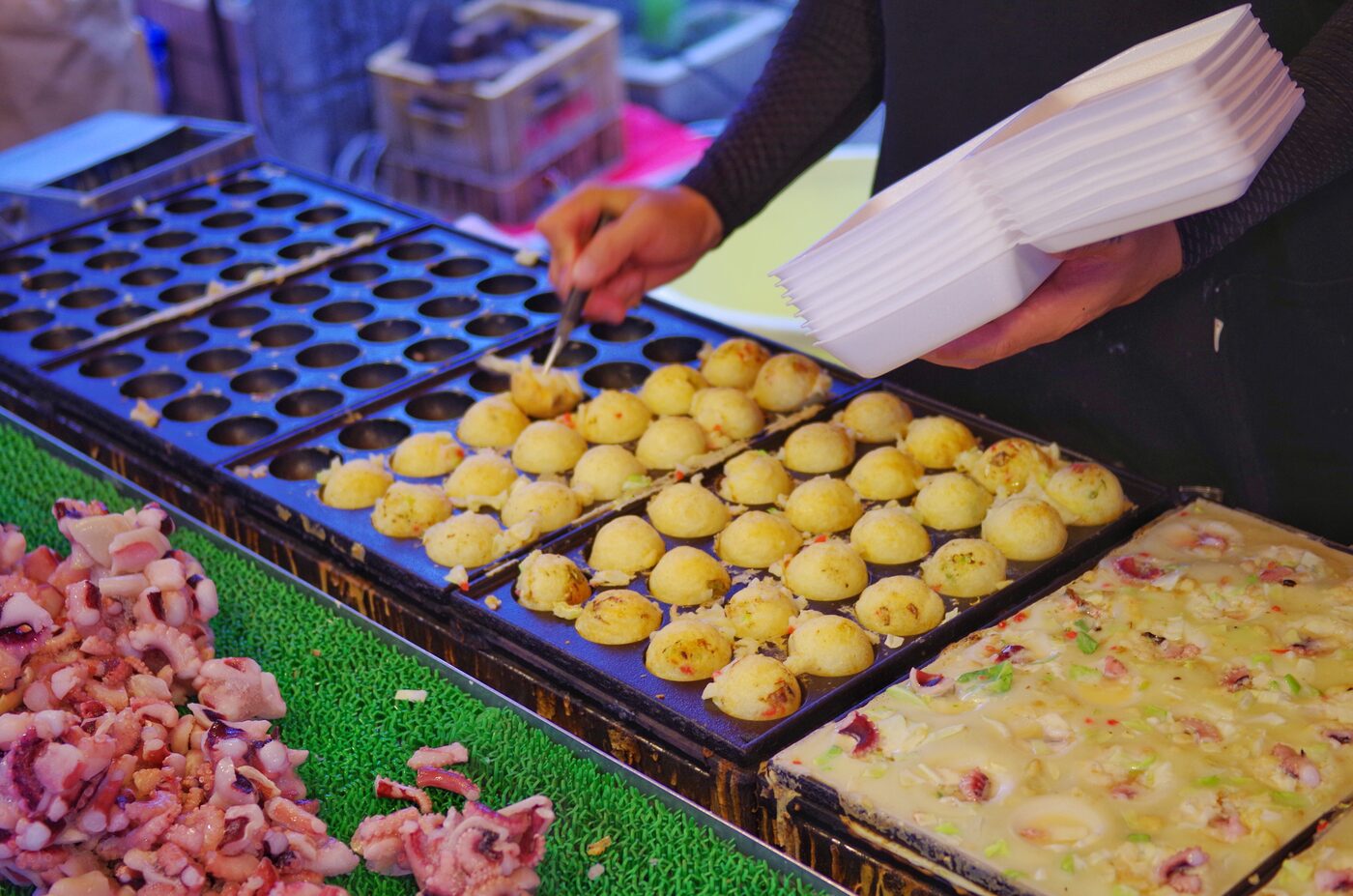
Takoyaki is an Osaka signature, with lines outside street-side shops throughout Dotonbori. Our picks are Wanaka's main shop and Kukuru. At Wanaka's Sennichimae main shop, a plate of eight runs about ¥600.
2. Okonomiyaki
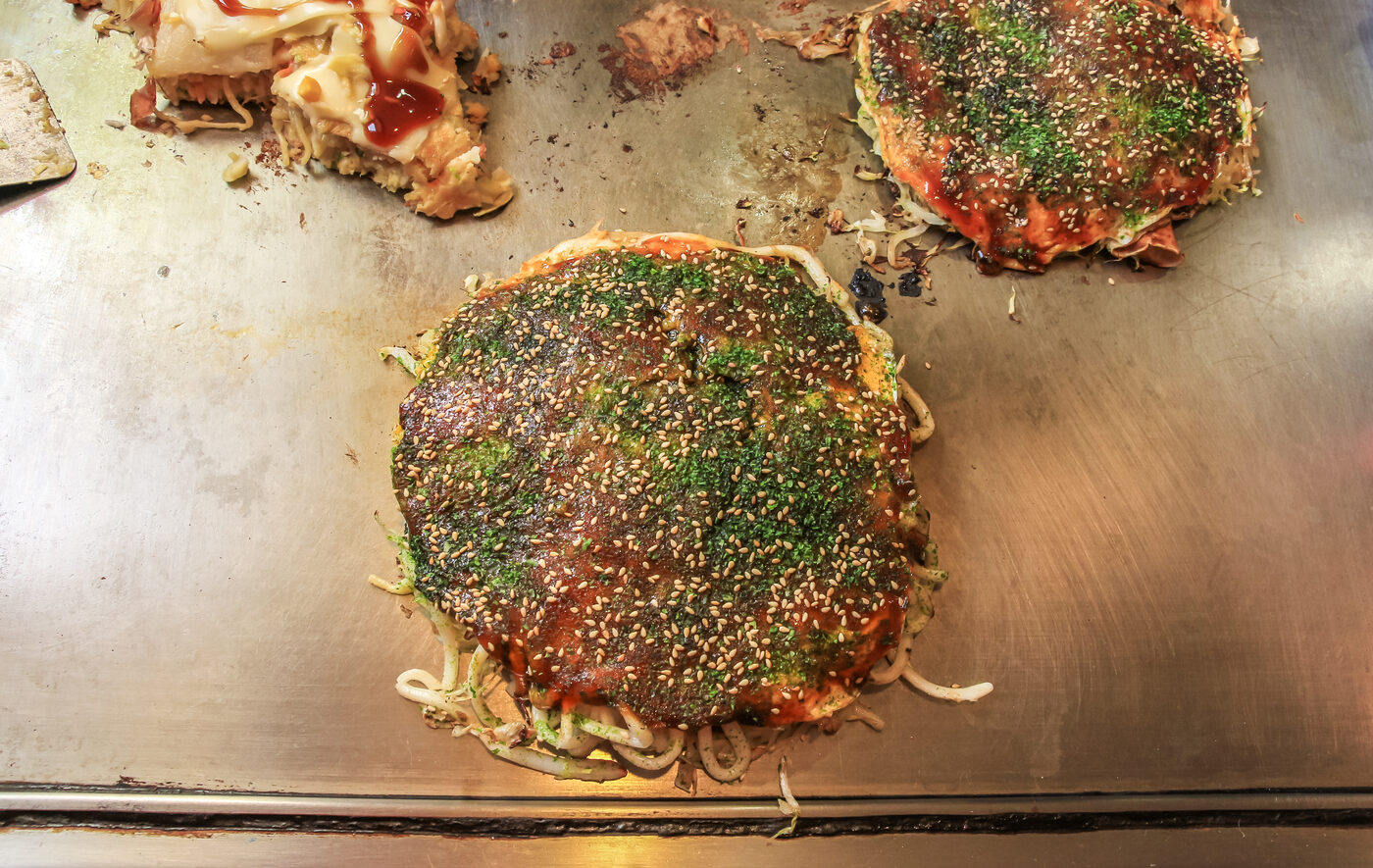
Mizuno and Chibo are two long-established restaurants around Dotonbori. Mizuno, founded in 1945, is known for yamaimoyaki, an okonomiyaki made with Japanese mountain yam and no flour at all. Lunch starts from ¥1,500. Plenty of places let you cook your own, but a chef-cooked one tastes a level better.
3. Kushikatsu in Shinsekai
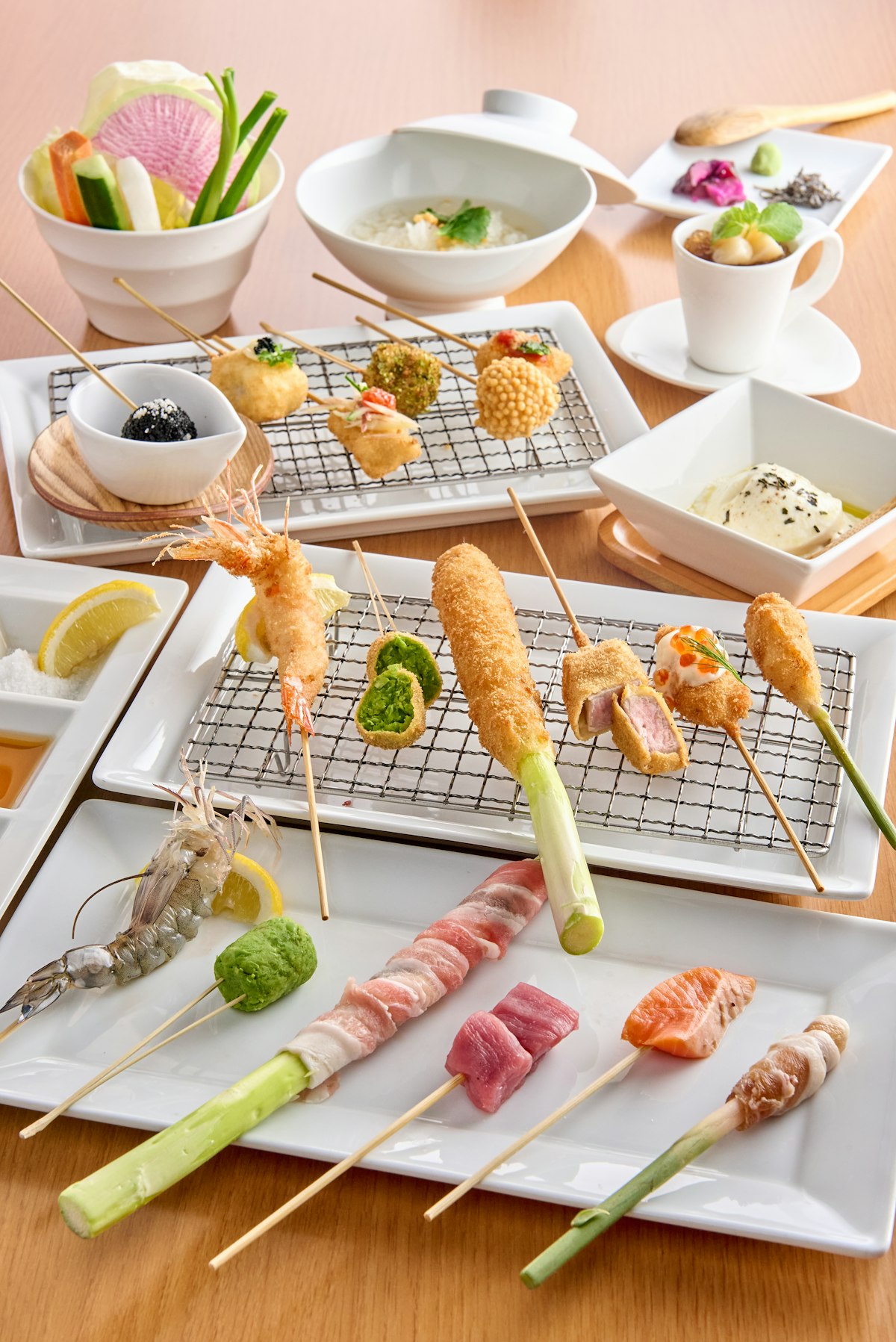
Daruma's main shop is the Shinsekai signature. Skewers start at around ¥150. Order around 10 with a cold draft beer. The house rule is no double-dipping in the sauce; staff explain it on your first visit.
Kushikatsu began as cheap, filling food for the working people of Shinsekai. Daruma opened near Tsutenkaku Tower in 1929 as a small stall and now fries around 40 kinds of skewers. The no-double-dipping rule exists because everyone at the counter shares the same sauce pot.
4. Butaman at 551 Horai
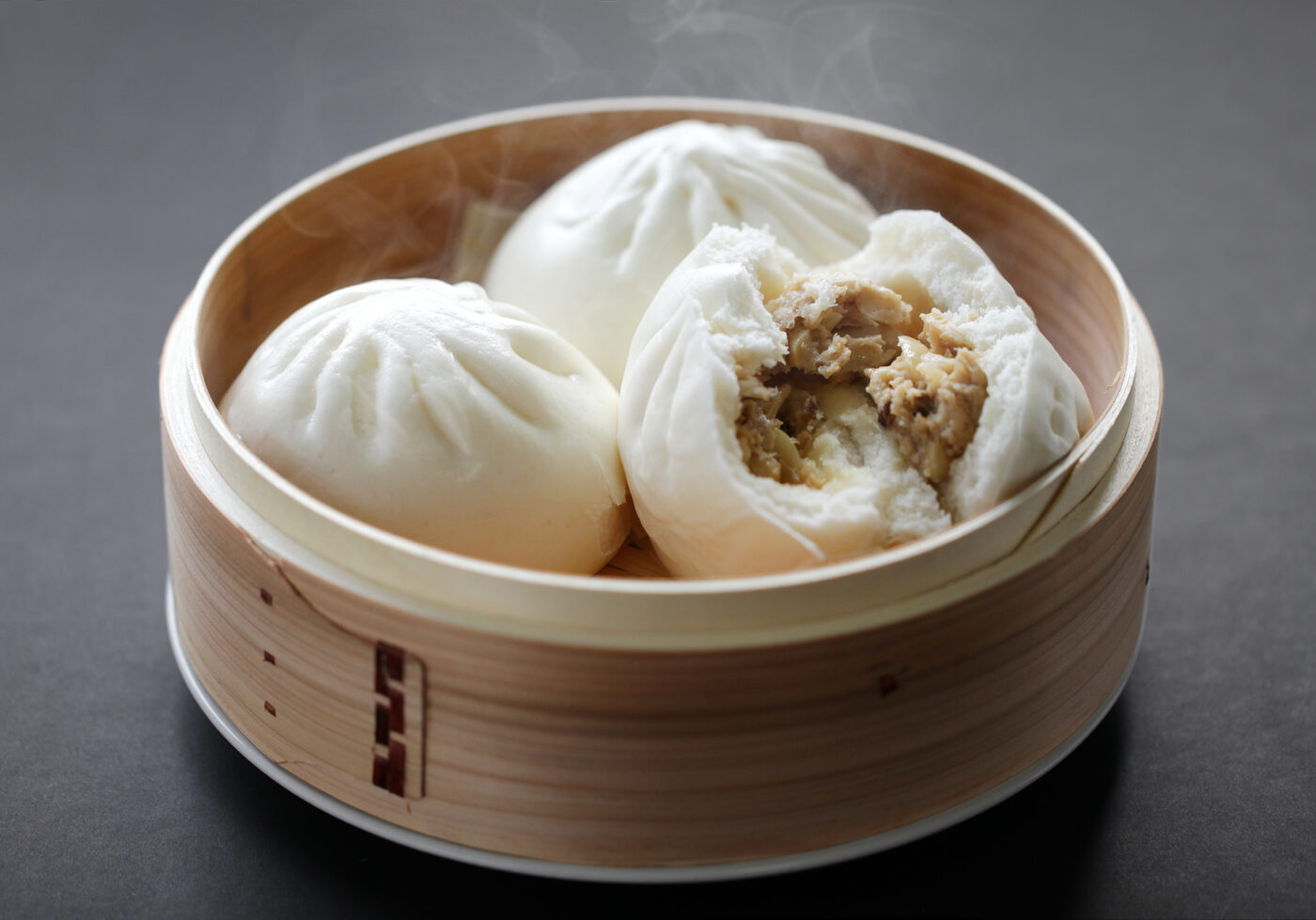
This Osaka specialty is almost as easy to find as a convenience store, with shops at both Shin-Osaka and Namba stations. Two warm butaman, or pork buns, cost ¥460. They're the most popular snack to take on the train. Horai opened as a cafeteria in 1945 and created the buns the following year; the 551 comes from the shop's old phone number, 64-551.
5. Tsuruhashi Koreatown
Get off at JR Tsuruhashi Station for Japan's largest Korean neighborhood. Gopchang hot pot, samgyeopsal, and kimchi are familiar Korean foods, but Japanese ingredients give them a slightly different taste.
Koreans began settling here in the 1920s, many of them from Jeju Island. After the war the shops multiplied, and in 1993 the merchants repaved the streets and raised Korean-style gates at the entrances. The 2002 World Cup, co-hosted by Korea and Japan, and the Korean Wave brought the crowds: by 2021 the neighborhood drew some two million visitors a year, and that same year it officially became Osaka Ikuno Koreatown.
Book
We are not party to bookings. Provider terms govern bookings/payments/refunds. We earn commission on our link bookings.