India
New Delhi
Eight cities, one capital
Mughal gardens, Old Delhi lanes
Delhi has been built, torn down and rebuilt so many times that eight historic cities lie stacked within it. A tower whose foundations were laid in the late 12th century, a Mughal emperor's 16th-century garden tomb, the 17th-century walled city of Old Delhi and the New Delhi the British designed in the 20th century all share one city, so a single day's plan can hold several centuries. You'll start the morning in a spice market where dried chilli stings your nose, look for shade beside the water channels of a Mughal garden at midday, and end the evening sitting next to strangers in a Sikh temple's community kitchen, sharing the same food.
Two Delhis
Old Delhi's former name is Shahjahanabad. It's the capital the Mughal emperor Shah Jahan built after deciding in 1639 to move his court from Agra, and at its heart stands the Red Fort (Lal Qila), ringed by red sandstone walls. Every Independence Day (August 15), the prime minister still raises the national flag here. New Delhi came about 270 years later. The 1911 Delhi Durbar set in motion the move of British India's capital from Calcutta to Delhi, and Edwin Lutyens planned the new capital. Rashtrapati Bhavan, the presidential palace on Raisina Hill, was once the Viceroy's House; after more than 17 years of construction, it took in its first occupant in 1929. Walk the ceremonial avenue of Kartavya Path from here to India Gate and you'll find a city on an entirely different scale from Old Delhi.
Old Delhi's market lanes
Chandni Chowk is the market street that Princess Jahanara, Shah Jahan's favourite daughter, designed in 1650. Each lane sells something different. • Khari Baoli — counted as Asia's largest wholesale spice market. Squeeze between the handcarts and the dried chilli in the air may set you sneezing. • Dariba Kalan — a lane long known as the Jeweller's Street. • Kinari Bazaar — a lane of shops selling tassels and trims. South of Chandni Chowk is Jama Masjid. Built by Shah Jahan between 1650 and 1656, it's Delhi's largest mosque, and its courtyard can hold 25,000 worshippers. Climb the southern minaret and Old Delhi's rooftops spread out below you. It closes from noon to 1:30 pm, so go in the morning.
Mughal gardens and the sultans' tower
Humayun's Tomb, completed in 1570, is the tomb of the Mughal emperor Humayun. It was the first garden tomb on the Indian subcontinent: the mausoleum sits at the centre of a charbagh, a garden divided into four by water channels. This form was refined until it led to the Taj Mahal. The gates open at sunrise, so walk the garden before the heat arrives. Qutb Minar is a 72.5 m tower whose foundations were laid in 1199, built up in layers of red and buff sandstone. The iron pillar in its courtyard carries a Sanskrit inscription in fourth-century Brahmi script, more than 800 years older than the tower. Lodhi Garden is a neighbourhood park whose walking paths run between the tomb of Muhammad Shah, built in 1444, and the tomb of Sikandar Lodi.
Delhi's table
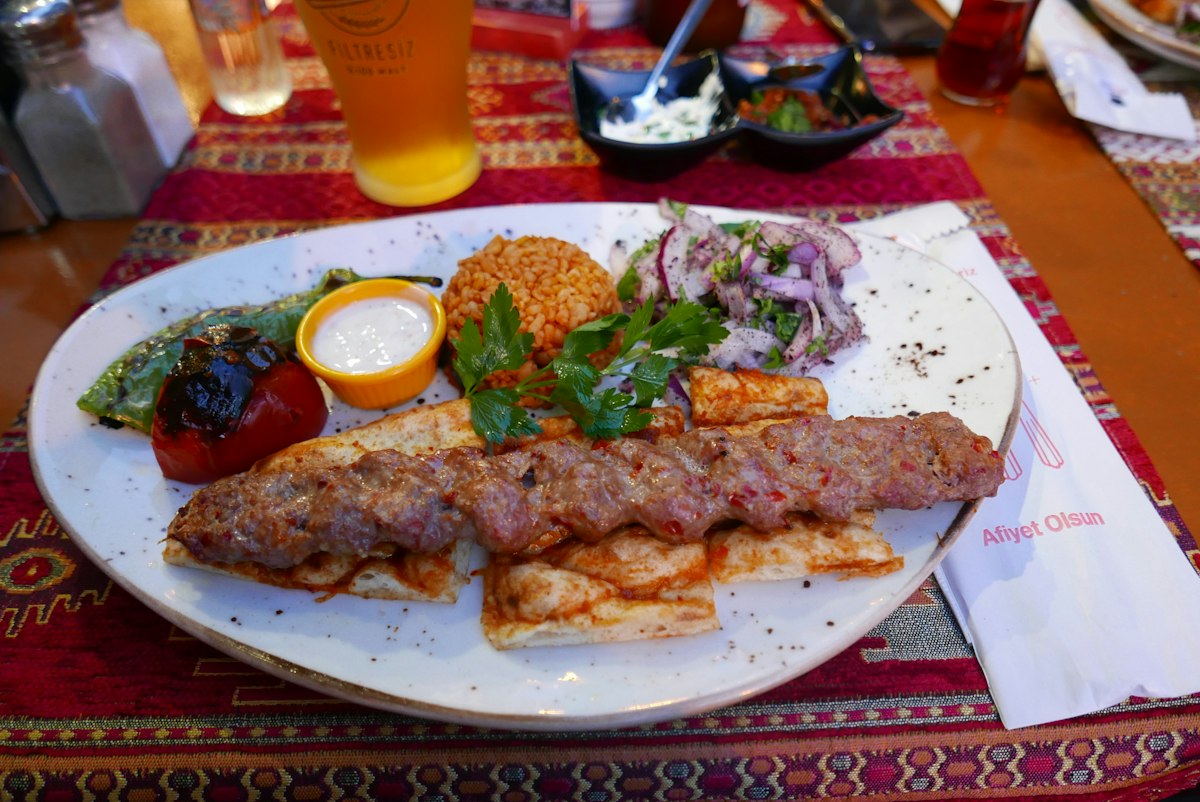
In Delhi, you can eat at old-school Mughlai restaurants and street stalls in the same day. • Butter chicken — at long-standing places like Moti Mahal in Daryaganj, scoop up the creamy gravy with naan. • Chole bhature — tear off pieces of puffed, deep-fried bhature and dip them into chole, a spicy chickpea curry. • Paratha — wheat flatbread cooked with a filling such as potato. Try it at Kake Da Hotel in Connaught Place or on Old Delhi's Paranthe Wali Gali. • Kebabs — what Karim's in Old Delhi is known for. In between, pick up some chaat from a street stall: crisp fried crackers topped with potato, yoghurt and sweet-sour chutney, so every bite tastes a little different.
Where prayer and song meet
Gurudwara Bangla Sahib is a Sikh temple that's open 24 hours a day. It stands on the site of the mansion where the eighth Sikh guru, Guru Har Krishan, stayed in 1664, and in its community kitchen, the langar, volunteers serve free meals to thousands of people every day. Cover your head and shoulders, go in, and sit down beside strangers for a meal. Nizamuddin Dargah is the shrine of the Sufi saint Nizamuddin Auliya. In front of the shrine you can hear qawwali, devotional music that sets Sufi poetry to song. The Lotus Temple, built from 27 marble petals, has been open to everyone, whatever their religion, since it opened in 1986.
Weather, fog and air
India's year, Delhi included, splits into three. October to March is the dry season, with almost no rain; April to June is the hottest stretch; and July to September is the monsoon, when most of the year's rain falls. In the hot season, Delhi sees days that reach around 45°C. Even the dry season comes with caveats. With no rain, air pollution gets worse, and from October to January, when the gap between day and night temperatures is wide, fog often delays flights. Pack a mask at that time of year, and don't schedule a tight connection or anything important right after your flight home.
Suggested itinerary: 3 nights, 4 days
Day 1 — Arrive → stroll and dinner around Connaught Place → India Gate Day 2 — Jama Masjid (morning) → Chandni Chowk, Khari Baoli and Paranthe Wali Gali → Red Fort (closes 4:30 pm) Day 3 — Humayun's Tomb (early morning) → Nizamuddin Dargah → Lodhi Garden → langar at Bangla Sahib Day 4 — Qutb Minar → Hauz Khas (13th-century fort ruins, a water tank and café streets) → airport
- Best season
- Oct (dry after the monsoon), Feb–Mar (mild and clear)
- Recommended length
- 3–4 days
What to eat
- Butter chicken (Moti Mahal, Daryaganj)
- Chole bhature (chickpea curry, fried bread)
- Paratha (stuffed wheat flatbread)
- Kebabs (Karim's, Old Delhi)
Handy tips
- You'll need a visa. e-Visas can only be applied for on the official site (indianvisaonline.gov.in), and you have to apply at least four days before you arrive. Japanese and South Korean nationals can also get a visa on arrival at Delhi airport, but South Korea's foreign ministry advises getting one before you fly, since local arrangements can change.
- Foreign visitors pay ₹600 in cash or ₹550 online to enter Qutb Minar. The Red Fort and Akshardham close on Mondays, so build that day around Humayun's Tomb, which opens daily. The Red Fort also shuts to the public every year ahead of the Independence Day ceremony on August 15; in 2026 it was closed from around mid-July until that day.
- South Korea's foreign ministry warns that taxi and auto-rickshaw drivers at airports and train stations sometimes take travelers to private agencies posing as government-run ones, where overpriced packages are pushed on them. Photograph the taxi's number plate before you get in.
Book
We are not party to bookings. Provider terms govern bookings/payments/refunds. We earn commission on our link bookings.