Egypt
Cairo
Pyramids and 1,000-year-old lanes
Koshari, then sunset on the Nile
Cairo is a city where different eras face each other across the Nile. West of the river on the Giza Plateau, the Great Pyramid built for King Khufu about 4,600 years ago stands at the edge of the desert. In the old city to the east, streets laid out when the Fatimids founded Cairo in 969 are still used as market lanes. Standing before the pyramid's limestone blocks in the morning, then drinking a cup of sweet black tea in a lane beside a 900-year-old city gate in the evening, isn't an unusual day here.
One river, layered cities
After the Arab conquest of 641, Amr ibn al-As founded Fustat, Egypt's first Islamic capital. In 969, the Fatimid general Jawhar al-Siqilli founded a new city: Cairo. The pyramids across the river in the western desert had been built some 3,500 years earlier. On Zamalek island in the middle of the Nile stands Cairo Tower, modeled on a lotus flower. At 187m, it's about 43m taller than the Great Pyramid.
Giza: three kings, one family
The three pyramids on the Giza Plateau are one family's tombs. The oldest and largest is King Khufu's Great Pyramid; the other two belong to his son Khafre and his grandson Menkaure. Khufu reigned around 2589–2566 BC. The plateau opens at 8am and closes at 4pm. It's limestone ground with almost no shade, so walking gets hard once the sun is high. Go in at opening time and walk around the Great Pyramid first, and you'll tire less. Up close, faces that look smooth in photos turn out to be steps of big stacked blocks, and lower down the plateau the Great Sphinx lies with its back to the three tombs.
Grand Egyptian Museum: Tutankhamun in one place
Built on a site overlooking the Giza pyramids, the Grand Egyptian Museum's building alone covers more than 300,000 square meters. A statue of Ramesses II stands in the Grand Hall, and one ticket gets you into the Grand Stairs, the Tutankhamun Galleries and Khufu's Boats Museum. For the first time since his tomb was found in November 1922, all of Tutankhamun's treasures are gathered in one place. Buy tickets on the official site (tickets.gem.eg), choosing a date and an entry time slot. The slot only sets when you go in, not how long you stay. The galleries open 9am–6pm, and until 9pm on Wednesdays and Saturdays, with last entry an hour before closing. Tickets are non-refundable, and tripods and selfie sticks can't be used inside. The Egyptian Museum on Tahrir Square opened in 1902. Its official page lists it as open daily 9am–5pm, with foreign adults paying EGP 550, and as of October 2026, work on its security systems and displays is also under way.
Al-Muizz Street and Khan el-Khalili
The spine of the old city to the east is Al-Muizz Street. It dates back to Cairo's founding in 969, and from Bab al-Nasr and Bab al-Futuh in the north to Bab Zuweila in the south, it's lined with buildings like the Qalawun complex and Al-Aqmar Mosque, with the old house of Bayt al-Suhaymi down a side alley. Khan el-Khalili, the market running parallel to the street, was founded by Jarkas al-Khalili, an emir of Sultan Barquq, and has been trading for more than 600 years. Bab Zuweila at the southern end is a city gate built in 1092 by the Fatimid vizier Badr al-Jamali. Nearby at Wekalet al-Ghuri, tanoura dancers spin in wide skirts on Saturdays, Mondays and Wednesdays.
From the Citadel to Old Cairo
Saladin Citadel stands on a hill split off from the Muqattam range. Muhammad Ali Pasha began the Mosque of Muhammad Ali inside it in 1830; work went on until his death in 1849, and he's buried there. The Mosque of Sultan Hassan, an easy pairing on the same day, took seven years to build from 1356, and the older of its two minarets is about 81m tall. Old Cairo holds the Babylon Fortress, which Emperor Trajan ordered built in the 2nd century, and the Hanging Church was built on top of its gate in the late 4th or early 5th century. Clustered beside it are the Church of Abu Serga, built where the Holy Family is said to have stayed; the Ben Ezra Synagogue; and the Mosque of Amr ibn al-As, the first mosque built in Cairo.
At Cairo's table
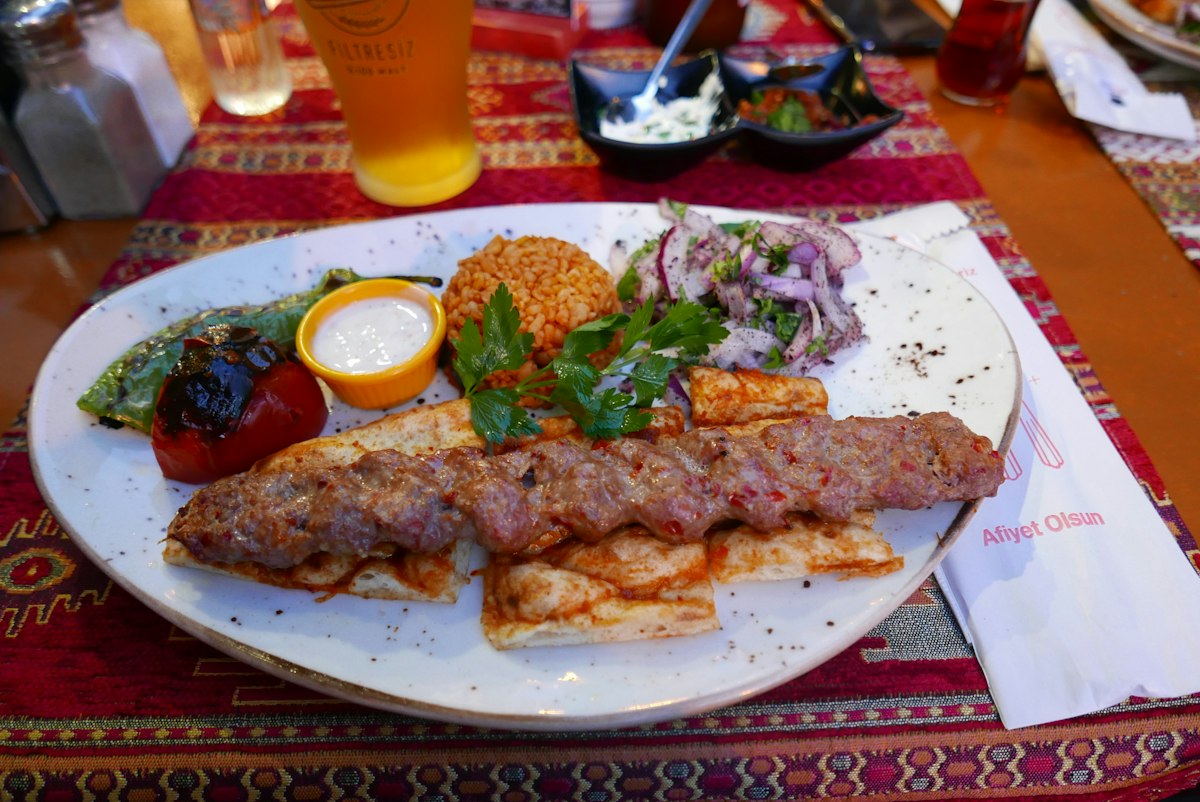
Cairo's mornings start with fava beans. Ful medames is slow-cooked fava beans dressed with oil and cumin; ta'ameya is Egypt's falafel, made from ground fava beans instead of chickpeas. Wrapped in flatbread, they make a typical breakfast. For lunch, a bowl of koshari—rice, lentils, macaroni and chickpeas topped with tomato sauce and crisp fried onions, then splashed with garlic vinegar—will keep you full. In the evening, have molokhia, a thick green soup fragrant with garlic and coriander, with rice, or try hamam mahshi, roast pigeon stuffed with rice or fire-roasted wheat. Korea's foreign ministry notes it's customary to tip around EGP 20–50 when you're served at restaurants, car parks or petrol stations.
Suggested 3-night, 4-day itinerary
Day 1 — Arrive → Cairo Tower on Zamalek → sunset felucca on the Nile Day 2 — Giza Plateau at 8am opening → Sphinx → Grand Egyptian Museum (into the evening on Wed/Sat) Day 3 — Saladin Citadel → Mosque of Sultan Hassan → Al-Muizz Street → Khan el-Khalili (tanoura show on Sat/Mon/Wed) Day 4 — Old Cairo (Hanging Church, Ben Ezra Synagogue) → one last market stroll → airport
- Best season
- Oct–Nov (the heat eases), Dec–Apr (cool and clear)
- Recommended length
- 3–4 days
What to eat
- Koshari (rice, lentils and macaroni in one bowl)
- Ful medames and ta'ameya (a fava bean breakfast)
- Molokhia (garlicky green soup)
- Hamam mahshi (stuffed roast pigeon)
Handy tips
- If you hold a South Korean passport, you can apply for Egypt's e-visa (visa2egypt.gov.eg) no later than 7 days before departure, and a single-entry tourist visa costs $30. Visas on arrival are available too, but Korea's foreign ministry lists them at $36 (including a $6 QR fee), so getting one ahead is cheaper.
- The Giza Plateau ticket (EGP 700 for foreign adults) doesn't include entry inside the Khufu, Khafre or Menkaure pyramids, so you'll need separate tickets. You can buy ahead with a bank card on the Ministry of Tourism and Antiquities' official site (egymonuments.com).
- Ride-hailing apps like Uber and inDrive cut down on fare disputes around the city. Regular taxis often don't use the meter, so Korea's foreign ministry advises agreeing on the fare before you get in and paying only after you get out.
Book
We are not party to bookings. Provider terms govern bookings/payments/refunds. We earn commission on our link bookings.