Hungary
Budapest
Two banks of the Danube, one city
A morning soak, a riverside night
Budapest used to be three cities. Hilly Buda and Óbuda on the west bank of the Danube (Duna) joined flat Pest on the east bank in 1873, and the merger gave the city its name. Cross a single bridge today and the neighborhood still changes character. The Buda side is a quiet hill of cobbled lanes and castle walls; the Pest side is flat ground laid out with boulevards, cafés and side streets that stay lit late. The city's basic rhythm: a morning soak in an open-air pool at a century-old thermal bath, then an evening watching the Parliament light up across the river.
The bridge that first joined two cities
The Széchenyi Chain Bridge (Széchenyi lánchíd) was the first permanent bridge between Buda and Pest. Count István Széchenyi came up with it, and it was built between 1839 and 1849. Retreating German troops blew it up in 1945, and it reopened in 1949, exactly 100 years after its first opening. After its first major overhaul in half a century, it came back in August 2023. Today buses, taxis and bikes use it, and the walkways have reopened, so you can cross on foot. Pass the four stone lions guarding its ends and stop in the middle: castle hill fills one side of the view, Pest's riverside buildings the other.
Up on Castle Hill
Buda Castle (Budavári Palota) and the old town run together along the Buda hill. The area and the Danube banks became a UNESCO World Heritage Site in 1987, and the listing was extended to Andrássy Avenue (Andrássy út) in 2002. The first things you'll notice up top are Matthias Church (Mátyás-templom), with its colorful tiled roof, and the white Fisherman's Bastion (Halászbástya) wrapped around it. The bastion's seven stone towers stand for the seven chieftains of the Magyar tribes who settled in what's now Hungary. The upper terraces and towers charge admission only during set hours (9 a.m. to 7 or 9 p.m., varying by season), and the bastion itself is open day and night. After dark, the spot where the Parliament's lights show through the arches across the river is where you'll linger longest.
Pest's riverfront: Parliament and the basilica
The building running 268 meters along the Pest bank is the Parliament (Országház). It was built from 1885 to 1902 to a design by Imre Steindl (Steindl Imre), who died five weeks before the inauguration. Since 2000, the Hungarian Holy Crown has been kept under round-the-clock guard in the Dome Hall, and you can see the interior on a guided tour of about 50 minutes. Further into town, St. Stephen's Basilica (Szent István-bazilika) was begun in 1851, went through a dome collapse in 1868, and wasn't consecrated until 1905. At 96 meters, the same as the Parliament's dome, it's tied for the tallest building in the city, and it keeps the right-hand relic of King Stephen, founder of the Hungarian state, known as the Holy Right (Szent Jobb). The panorama terrace, 65 meters up, is about 304 steps or an elevator ride away.
A city of thermal baths
In Budapest, thermal water as hot as 77°C rises through more than a hundred drilled wells and a few natural springs. The most popular bath is Széchenyi Thermal Bath (Széchenyi fürdő), in the middle of City Park (Városliget). Its domed building opened in 1913 and gained an outdoor section in 1927, and in the morning steam drifts off the open-air pools ringed by palace-like walls. On the 2026 price list, a weekday (Mon–Thu) daily ticket with a locker is 13,200 HUF. At the foot of Gellért Hill, Rudas Thermal Bath (Rudas fürdő) is nearly 450 years old. On Fridays and Saturdays it opens for night bathing from 10 p.m. to 3 a.m., with tickets sold online only. The Turkish bath (törökfürdő) is women-only on Tuesdays, and men-only all day Wednesday and on Monday, Thursday and Friday mornings (until 10:45 a.m.). Gellért Thermal Bath (Gellért fürdő) has been closed for renovation since October 1, 2025, with reopening planned for 2028.
Cafés and the Great Market Hall
Around the turn of the 20th century, Budapest had about 500 cafés, and a few from that era are still in business. Gerbeaud on Vörösmarty Square (Vörösmarty tér) opened in 1858, Café Centrál (Centrál Kávéház), closely tied to the literary magazine Nyugat, in 1887, and the New York Café (New York Kávéház) in 1894. To see Hungarian ingredients in one place, head to the Great Market Hall (Központi Vásárcsarnok). In the 11,000-square-meter hall, the ground floor holds butchers, fruit and vegetable stalls, dairy and bakeries, and the upper floor gathers the restaurants. It's open weekdays 6 a.m.–6 p.m., Saturday 6 a.m.–4 p.m. and Sunday 10 a.m.–4 p.m., and closed on public holidays.
After dark: the river and District VII
When the sun goes down, walk along the river. From the Pest-side promenade, the Duna Corso (Duna-korzó), the lit castle and Chain Bridge across the water come into view at once; stand on the Buda bank and the illuminated Parliament reflects in the river. To scan the same riverfront by day, ride tram 2, which runs along the Danube. Later, head to Pest's District VII (VII. kerület), home to the ruin bars (romkocsma), fitted out in old buildings left largely as they were. In the same district, the Dohány Street Synagogue (Dohány utcai zsinagóga), opened in 1859, is the largest synagogue in Europe. In winter, a Christmas market sets up on the square in front of St. Stephen's Basilica (in 2026, November 13 to January 1).
A 3-night, 4-day itinerary
Day 1 — Arrive → cross the Széchenyi Chain Bridge on foot → night views from the Duna Corso Day 2 — Parliament tour → St. Stephen's Basilica terrace → tram 2 → Buda Castle District and Fisherman's Bastion at dusk Day 3 — Széchenyi Thermal Bath → Heroes' Square (Hősök tere) and Andrássy Avenue → a historic café → evening in District VII Day 4 — Great Market Hall → airport (if you're staying over a Friday or Saturday night, Rudas night bathing is a good addition)
- Best season
- Apr–May (spring walks by the river), Sep–Oct (cool autumn), Dec (Christmas market)
- Recommended length
- 3–4 days
What to eat
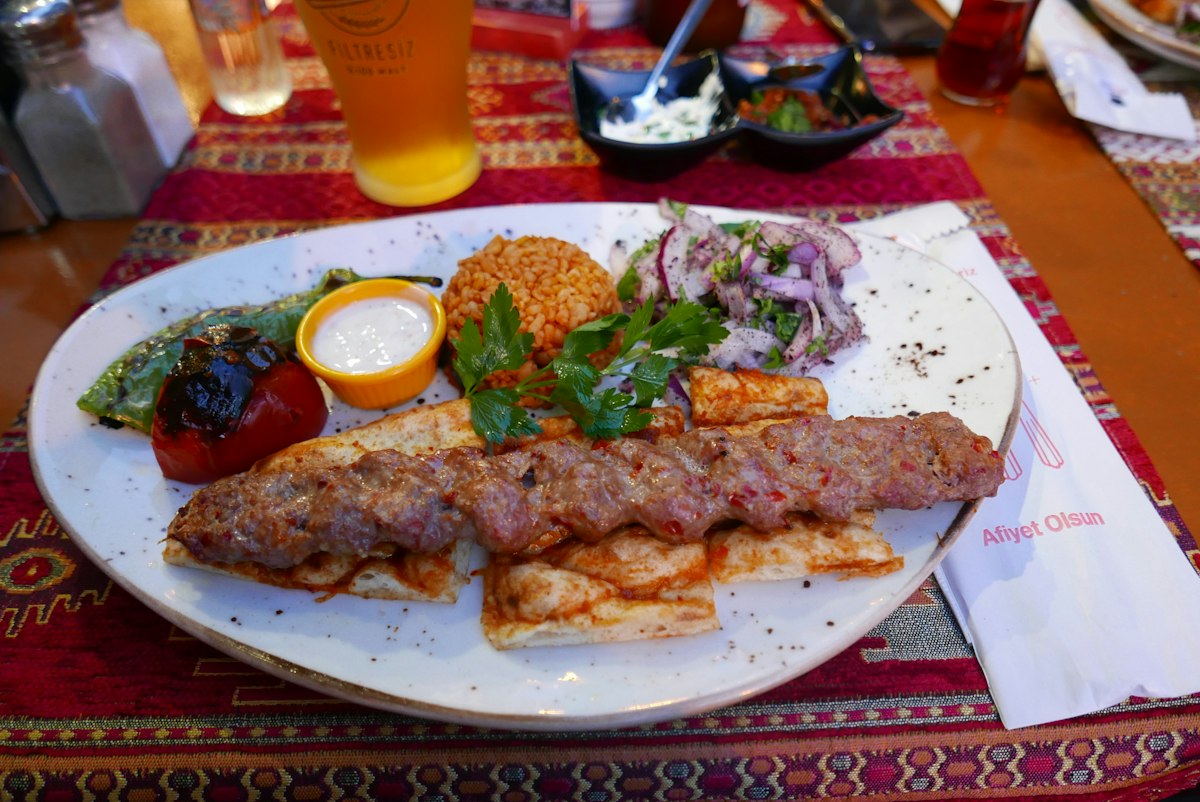
- Goulash (beef soup with paprika)
- Lángos (fried bread with sour cream and cheese)
- Chicken paprikash (paprika chicken stew)
- Dobos torte (layer cake with a caramel top)
Handy tips
- At Széchenyi, slippers are mandatory, but towels and slippers aren't handed out or rented—bring your own or buy them at the shop. Since August 1, 2025, children under 14 can't enter.
- Hungary uses the forint (HUF). Places that take euros often apply poor rates, and airport exchange counters have the worst rates, so change only what you need when you land.
- If a 10–15% service charge (szervizdíj) is already on your restaurant bill, you don't need to tip. If it isn't, about 10% is usual.
Book
We are not party to bookings. Provider terms govern bookings/payments/refunds. We earn commission on our link bookings.