Belgium
Brussels
A square rebuilt in stone
Waffles, pralines and lambic
Step out of a narrow lane into the Grand-Place, and every facade around you is crowned with steep gables and gilded ornament. Brussels is better known as the home of the EU institutions, yet a day here fills up with things you hold in your hand: fries in a paper cone, a waffle fresh off the iron, pralines picked one by one into a box, and more kinds of beer than you could ever get through. In between, comic-book heroes are painted across building walls, and René Magritte's surrealist paintings hang in the museum.
Rebuilt in stone after the bombardment
In August 1695, during the War of the League of Augsburg, French troops under Marshal de Villeroy bombarded the city and destroyed most of the houses on the Grand-Place. The Town Hall, the actual target, came through with its facade and tower still standing. The guilds rebuilt the surrounding houses quickly, this time in stone, and the square became a UNESCO World Heritage Site in 1998. Each season brings its own event. In early July, 1,400 people take part in the Ommegang procession, which honours Charles V's arrival in Brussels in 1549. On the weekend around 15 August in even years, a 1,680 m² carpet of begonias, dahlias, grass and bark is laid across the square. During the Winter Wonders festival, a Christmas tree goes up and a sound-and-light show plays; in 2026 it runs from 27 November to 3 January 2027.
The boy with 900 outfits
A few lanes down from the Grand-Place, you'll find Manneken-Pis. From the 15th century, this spot was a fountain that supplied people with drinking water. The boy's wardrobe holds more than 900 outfits. There are 23 fixed dates on which he's dressed, and when he receives a new costume, there's an official handover ceremony. The outfits are kept nearby at the GardeRobe MannekenPis museum, Rue du Chêne 19, so you can browse the wardrobe even on days the statue isn't dressed.
The praline, born under a glass roof
Near the Grand-Place, the Galeries Royales Saint-Hubert opened on 20 June 1847 with Leopold I in attendance. Its glass roof rests on arches, so you can follow the shop windows even on a rainy day. The praline was born in a pharmacy in the Galerie de la Reine, part of the same arcade. Jean Neuhaus started out coating medicines in chocolate and switched to filled chocolates in 1912. In 1915, his wife, Louise Agostini, came up with the ballotin, a box that protects the chocolates and shows them off.
Waffles, mussels and lambic
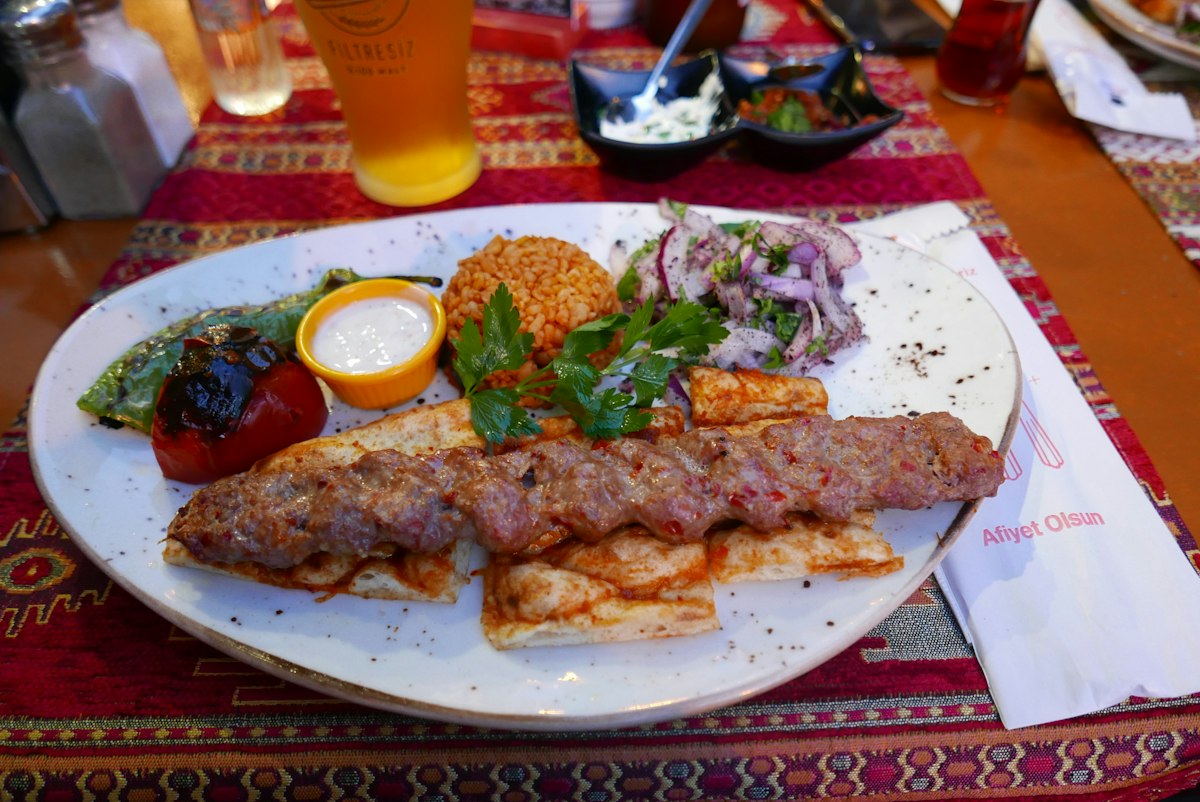
Unlike the Liège waffle, the Brussels waffle is rectangular and made with unsweetened batter. It's crisp outside and soft inside, and what goes on top is up to you. For a proper meal, moules-frites — mussels with fries — comes first. Shrimp croquettes, filled with grey shrimp and béchamel, are a Brussels speciality; the city even holds a competition every year to find the best one. There's also carbonade, beef with a gingerbread and beer sauce, and stoemp, named after the Dutch for mashed potatoes. Belgium's beer culture joined UNESCO's list of intangible cultural heritage in 2016, and the country makes almost 1,500 kinds of beer. For lambic, head to Brasserie Cantillon in Anderlecht, the oldest working brewery in Brussels. It's open 10 a.m.–4 p.m. on Mondays, Tuesdays, Thursdays, Fridays and Saturdays, and closed on Wednesdays, Sundays and public holidays. It also shuts for about a week each summer, so check its closure notices before you go.
Comics on the walls, surrealism in the frame
Comic murals have been appearing on Brussels walls since 1991, and there are now more than 80. Follow characters like Tintin or Corto Maltese from one neighbourhood to the next and half a day slips away. Start the mural walk at the Comic Art Museum. The building opened in 1906 as a textile merchant's warehouse and was designed by Art Nouveau architect Victor Horta. Adult admission is €14. René Magritte's paintings are gathered in the Magritte Museum on Place Royale, where an adult ticket costs €13. The Place Royale entrance is only for visitors who booked online; without a ticket, go to the ticket desk at the main entrance, Rue de la Régence 3.
The Atomium: an iron crystal, magnified 165 billion times
The Atomium was built as the emblem of the 1958 Brussels World's Fair. Its nine spheres form an iron crystal magnified 165 billion times. It was never meant to outlive the fair, and it's now the most popular attraction in the city. From the top sphere, the whole of Brussels spreads out below you. It's usually open daily from 10 a.m. to 6 p.m. (last entry 5.30 p.m.), and an adult ticket is €17. It closes for a few weeks every winter for maintenance; in 2027, that's 18 January to 5 February.
A day in Bruges or Ghent
Three trains an hour run from Brussels-South to Bruges, and the trip takes about an hour. From Bruges station, the Markt, the main square, is a 20-minute walk, or you can take bus 1 or 2, which run every five minutes. In Ghent, St Bavo's Cathedral holds the Van Eyck brothers' Ghent Altarpiece, the Mystic Lamb. While the final restoration continues until spring 2027, high-quality photographs hang in place of seven of its panels in the cathedral, and you can watch the upper register being restored at the MSK, Ghent's Museum of Fine Arts. From Gent-Sint-Pieters station, trams 1 and 3 run to the centre every 10 minutes.
- Best season
- May–Sep (long days, festivals on the square), Dec (Christmas markets)
- Recommended length
- 2–4 days
What to eat
- Moules-frites (mussels with fries)
- Brussels waffle (rectangular, unsweetened batter)
- Pralines (first made in the Galerie de la Reine)
- Lambic beer (Cantillon brewery)
Handy tips
- On the metro, trams and buses, tapping a contactless card costs €2.40 a journey, and you're never charged more than €8.50 a day. Changing vehicles within 60 minutes of your first tap is free, but only if you tap the same card at every change.
- The Magritte Museum and the Comic Art Museum close on Mondays (though the Comic Art Museum opens on most Mondays in July and August). On the first Wednesday of every month, the Magritte Museum and the Old Masters Museum are free from 1 p.m.
- Brussels-South station is signed Bruxelles-Midi in French and Brussel-Zuid in Dutch. Whichever name a timetable or sign uses, it's the same station.
Book
We are not party to bookings. Provider terms govern bookings/payments/refunds. We earn commission on our link bookings.