Thailand
Bangkok
Convenience-store food at its best
Come once, and you'll be back
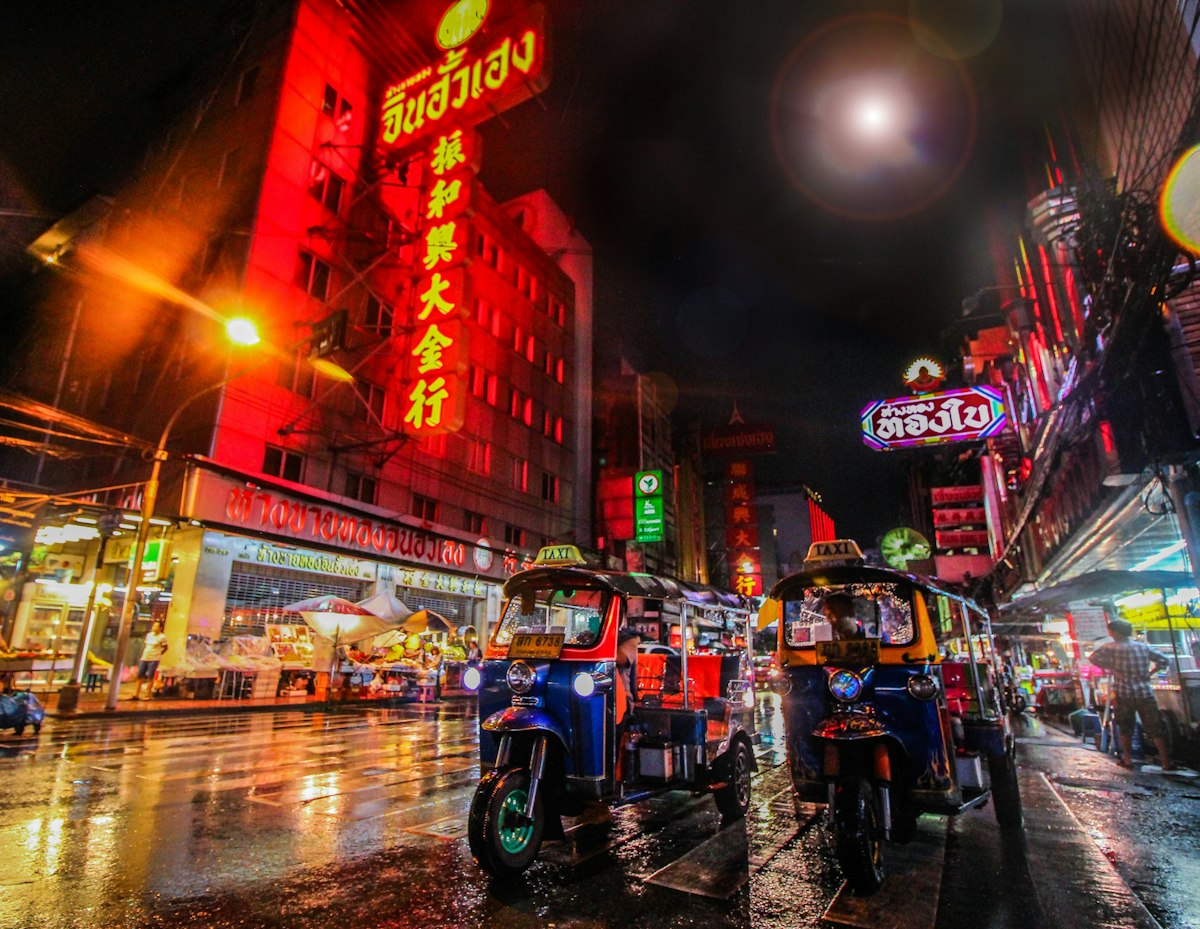
Bangkok packs in about one and a half times the sensory intensity of a city like Seoul. The smell of street food, tuk-tuk horns, temple gold, rooftop cocktails — all five senses switch on at once. It's one of the cities with the highest share of repeat visitors, and at about a six-hour flight from Seoul, it fits a 4–6 day trip best.
First impressions — warm chaos
The moment you first set foot in Bangkok, what hits you hardest is the smell. Coconut, lime and chili from the street stalls, incense burning at the temples, the earthy scent right after the rainy season — it's a mix you won't catch in any other city. It's dizzying at first, but by day two it feels familiar, and once you're home you'll find yourself missing it. The "Land of Smiles" nickname is well earned. Look lost on the street and someone will come over and spend five minutes guiding you with hand gestures, even if they don't speak English. Scams aren't common here, but the tuk-tuk drivers outside the Grand Palace who tell you "it's closed today, let's go to another temple" are running one every time. Just ignore them. It's hot all year. The November–February dry season is bearable (28–32°C during the day), March to May is the hottest stretch (35°C+), and mid-May to mid-October is the rainy season. Our pick, hands down, is November to February.
The temple route — a daytime classic
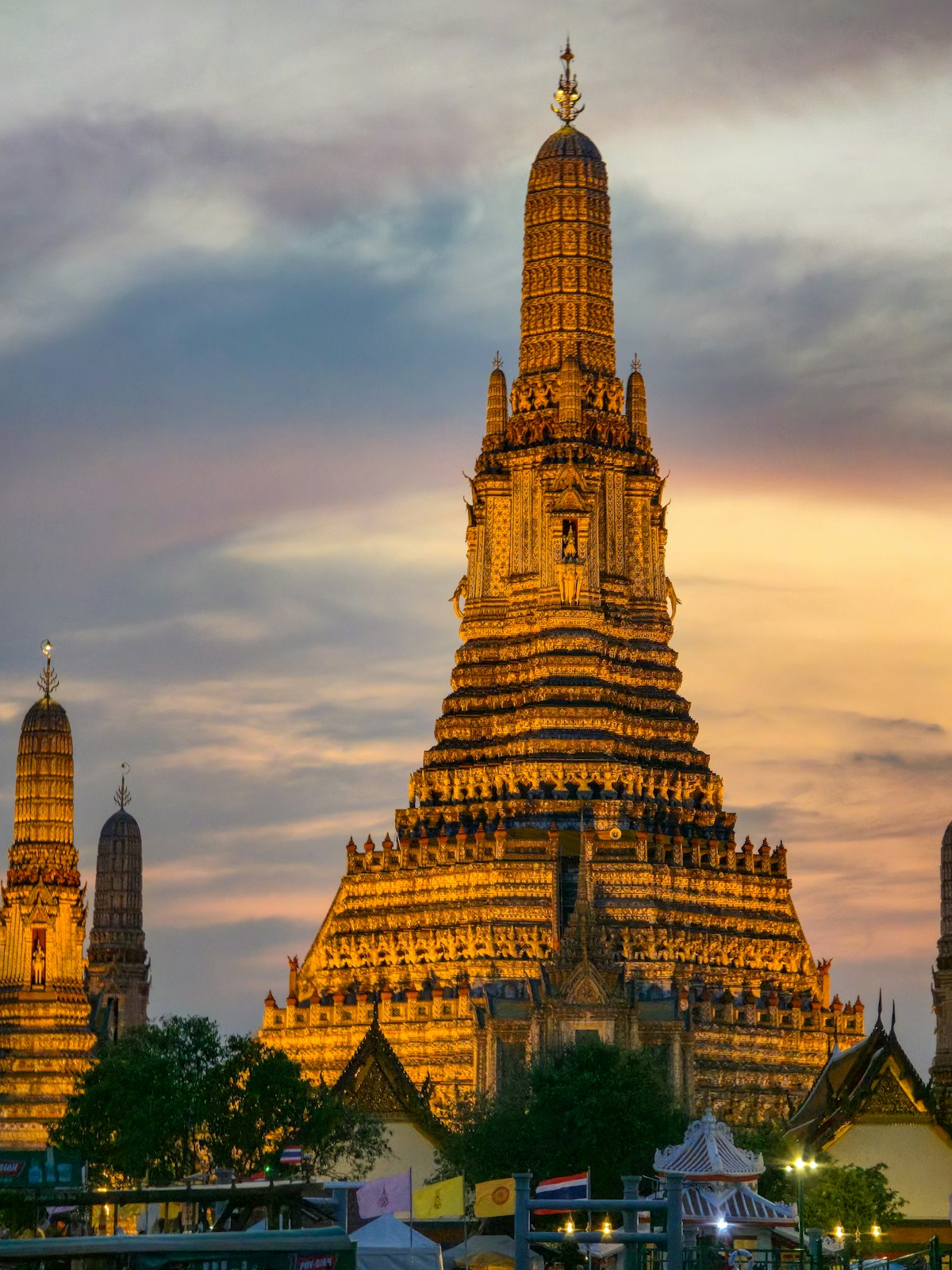
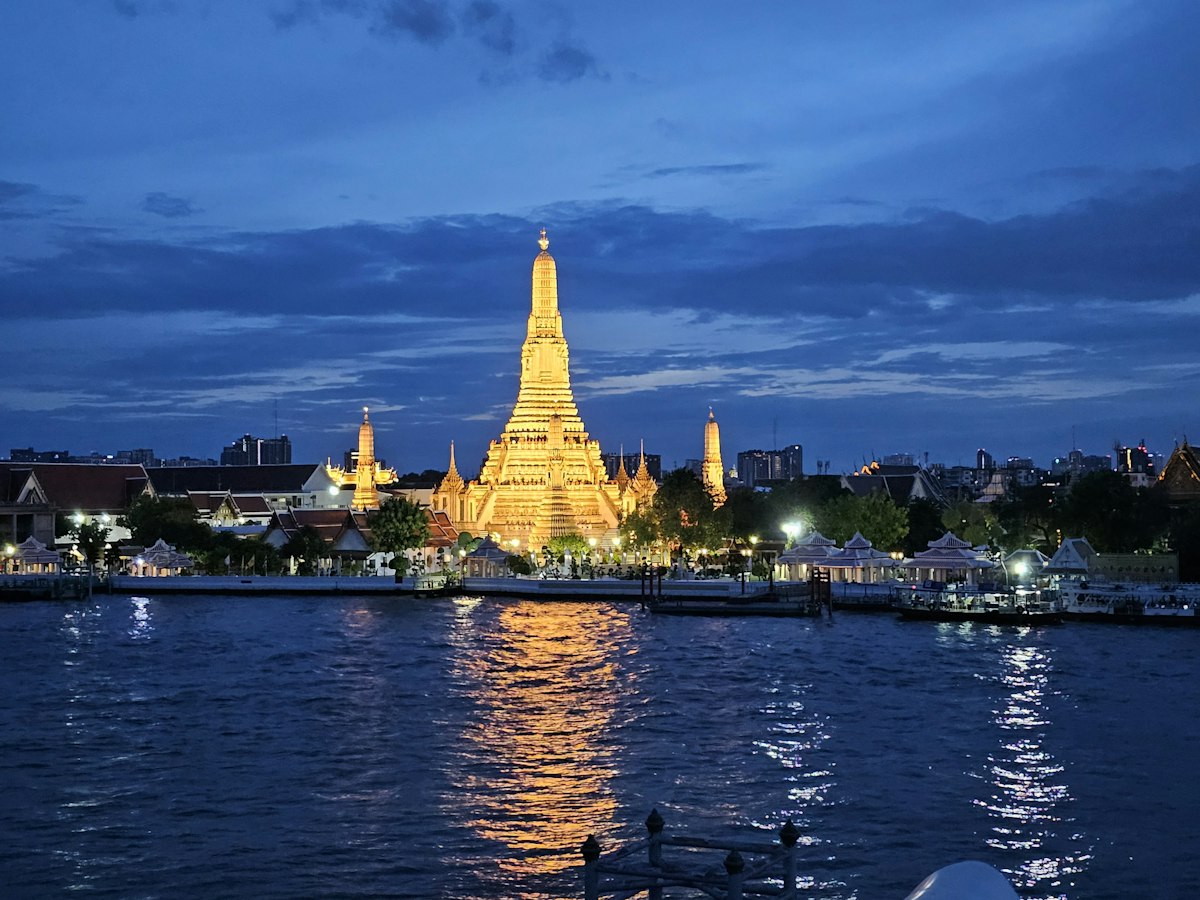
Bangkok's big three temples all sit along the Chao Phraya River, so you can see them in one go. Between 6 and 9 a.m. the crowds are thinner and the light is softer — the best window for photos. Wat Arun (Temple of Dawn) — on the west bank. Its 79 m white spire, the prang, turns pink in the first rays of dawn, but the "Temple of Dawn" nickname comes from King Taksin, who arrived here at dawn. Wat Arun at sunset, seen from a café or rooftop on the east bank, is the city's most-shared photo. Wat Pho (Temple of the Reclining Buddha) — home to a golden reclining Buddha 46 m long and 15 m high. Look closely at the soles: the Buddha's 108 auspicious symbols, set in mother-of-pearl. Wat Pho is the birthplace of Thai massage, and a massage school opened inside the temple in 1955. The Grand Palace — built in 1782 by King Rama I and once the official residence of the Thai royal family. Inside is Wat Phra Kaew, which enshrines the Emerald Buddha. Admission is 500 baht, and the dress code is strict: shoulders, knees and ankles must all be covered, and no flip-flops. The most efficient way to see all three is the Chao Phraya Express Boat (orange flag, 19 baht a ride) or your hotel's shuttle boat.
Eating — from street stalls to Michelin stars
Bangkok's food value is hard to beat. From a ₩5,000 plate of street pad thai to a ₩50,000 meal at a Michelin chef's restaurant, you choose where your money goes. Street food — the Silom night market, Khao San Road and Chinatown (Yaowarat) are the three big hotspots. In Chinatown, the crab curry and oyster omelet at T&K Seafood are worth an hour in line. The pad thai benchmark — Thip Samai, open since 1966. The line runs 30–60 minutes, but it moves fast. Order the signature pad thai and an orange juice, squeezed at your table. Boat noodles — head to Boat Noodle Alley at Victory Monument. The bowls are small, so the done thing is to work through five to ten in one sitting. A Michelin meal — Sorn (three stars, southern Thai), Le Du (one star, modern Thai), Gaggan (a regular on Asia's 50 Best) and more. Sorn's Classic Menu is 7,800 baht (plus service and VAT), yet Bangkok is still one of the best-value Michelin cities there is. Dessert — the go-to for mango sticky rice is Mae Varee in Thonglor. It's a whole different thing from the versions you've had elsewhere.
Shopping — mega-malls to night markets
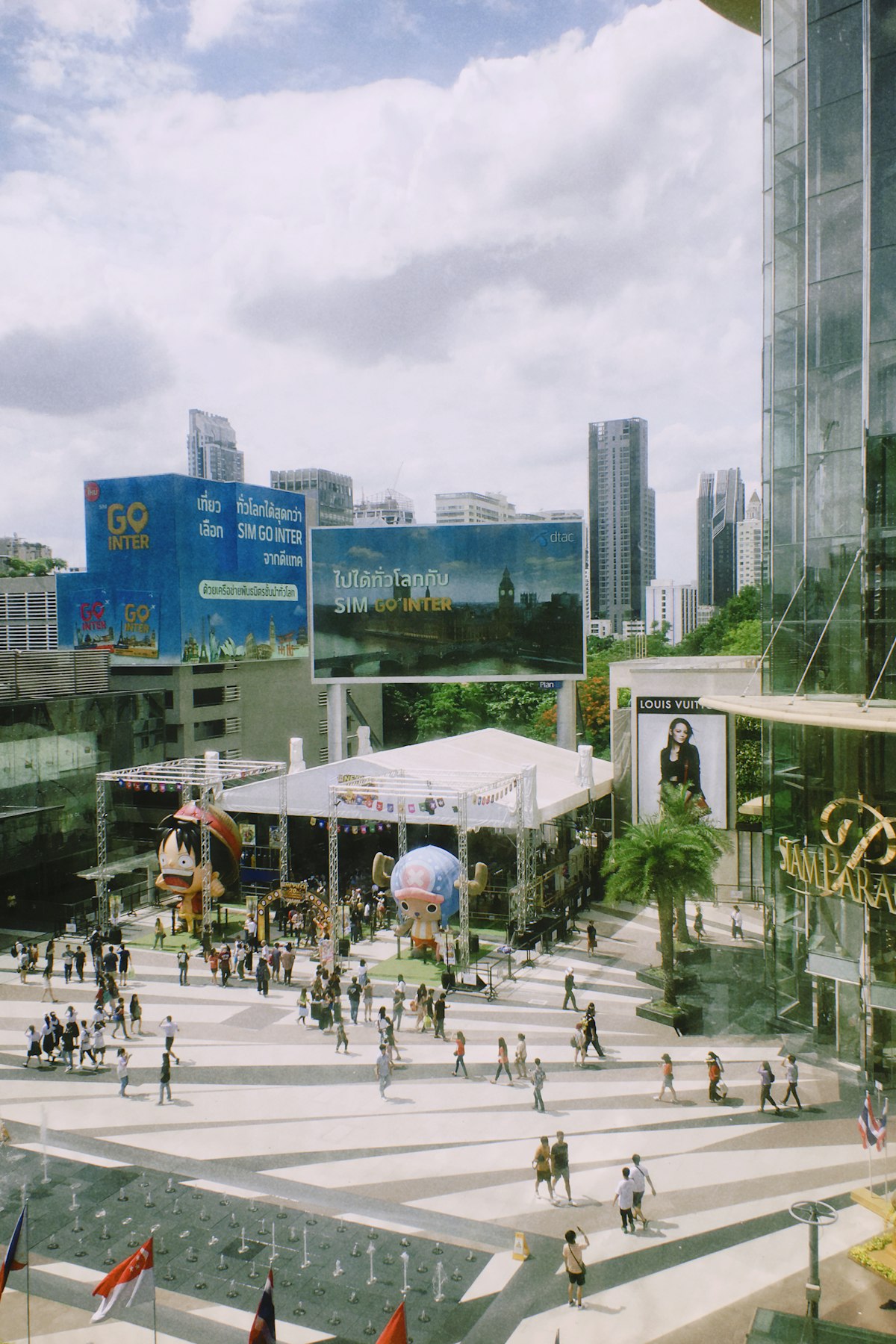
Bangkok's shopping is neatly sorted by category. • Siam Paragon, Siam Center, Siam Discovery — luxury and high-end, centered on Siam station. • MBK Center — eight floors packed with electronics, unbranded fashion and souvenirs. Haggling is everyday business. • Terminal 21 — an airport-themed mall where every floor is a different city (Paris, Tokyo, London and more). The food court is excellent value. • Chatuchak Weekend Market — open Saturdays and Sundays, with more than 8,000 shops; it's Southeast Asia's largest market. • Asiatique — a riverside night market, also a popular end point for dinner cruises. Shopping tips — start haggling at 50% of the first price. Big malls offer tax-free shopping (VAT refunds): spend 2,000 baht or more in a single store and apply at the counter.
Rooftops and night views — where Bangkok really begins
A Bangkok night is all about city lights and a rooftop cocktail. The towers aren't as tall as Tokyo's or New York's, but the density and color are more intense. Sky Bar at lebua — the rooftop from The Hangover Part II. It's on the 64th floor, cocktails start at 1,300 baht (plus service and tax), and there's a dress code. Octave Rooftop (Marriott, Thonglor) — a bar on the 49th floor with 360-degree views. Prices are fair and the atmosphere is good. Get there 30 minutes before sunset. Vertigo and Moon Bar (Banyan Tree) — an open-air bar on the 61st floor. The Vertigo Sunset is one of its signature cocktails. Sirocco — an open-air restaurant on the 64th floor beneath lebua's golden dome, just steps from Sky Bar. If rooftops feel like too much, a Chao Phraya dinner cruise is a good alternative: a two-to-three-hour multi-course Thai dinner, with the temples and palaces lit up on both banks.
Day trips from the city
Ayutthaya — 90 minutes from Bangkok by car. Founded in 1351, the old capital was left in ruins by the Burmese invasion of 1767, and its preserved temple complex is a UNESCO World Heritage Site. The signature sight is a Buddha head wrapped in the roots of a bodhi tree. Damnoen Saduak Floating Market — 90 minutes by car. It's an old-time scene: vendors selling food from boats along narrow canals. It's liveliest from 6 to 9 a.m., and a package tour is the easiest way to go. Pattaya — 90 minutes by car. It's a beach town, but the feel is close to Bangkok's. With one night there, you get Walking Street after dark and, the next day, nature such as Coral Island. We'd suggest getting to know the city itself in depth rather than day-tripping, but if you have seven days or more, slotting in one or two of these adds some variety.
A suggested 5-night, 6-day itinerary
Day 1 — Arrive in Bangkok (evening) → hotel check-in → first street-food meal on Khao San Road Day 2 — Temple route (Wat Arun, Wat Pho, Grand Palace) → lunch in Chinatown → rest at the hotel → stroll around Siam for the night views Day 3 — Chatuchak Market (if it's a weekend) → boat noodles for lunch → one-hour massage → rooftop dinner Day 4 — Day trip to Ayutthaya → back to the city → night views at Sirocco or Octave Day 5 — Shopping in Siam → massage → dinner cruise Day 6 — Hotel check-out → a last Michelin lunch or massage → airport
- Best season
- Nov–Feb (dry, cooler)
- Recommended length
- 4–5 days
What to eat
- Pad thai and kuay teow (rice noodles)
- Som tam (green papaya salad)
- Massaman curry
- Mango sticky rice
Handy tips
- A top-up card is the easiest way to ride the BTS and MRT, and you'll need the Grab app.
- For massages, a neighborhood shop at 250–400 baht an hour beats a downtown hotel spa on value.
- May to October is the rainy season, with a short, heavy downpour about once a day.
Book
We are not party to bookings. Provider terms govern bookings/payments/refunds. We earn commission on our link bookings.