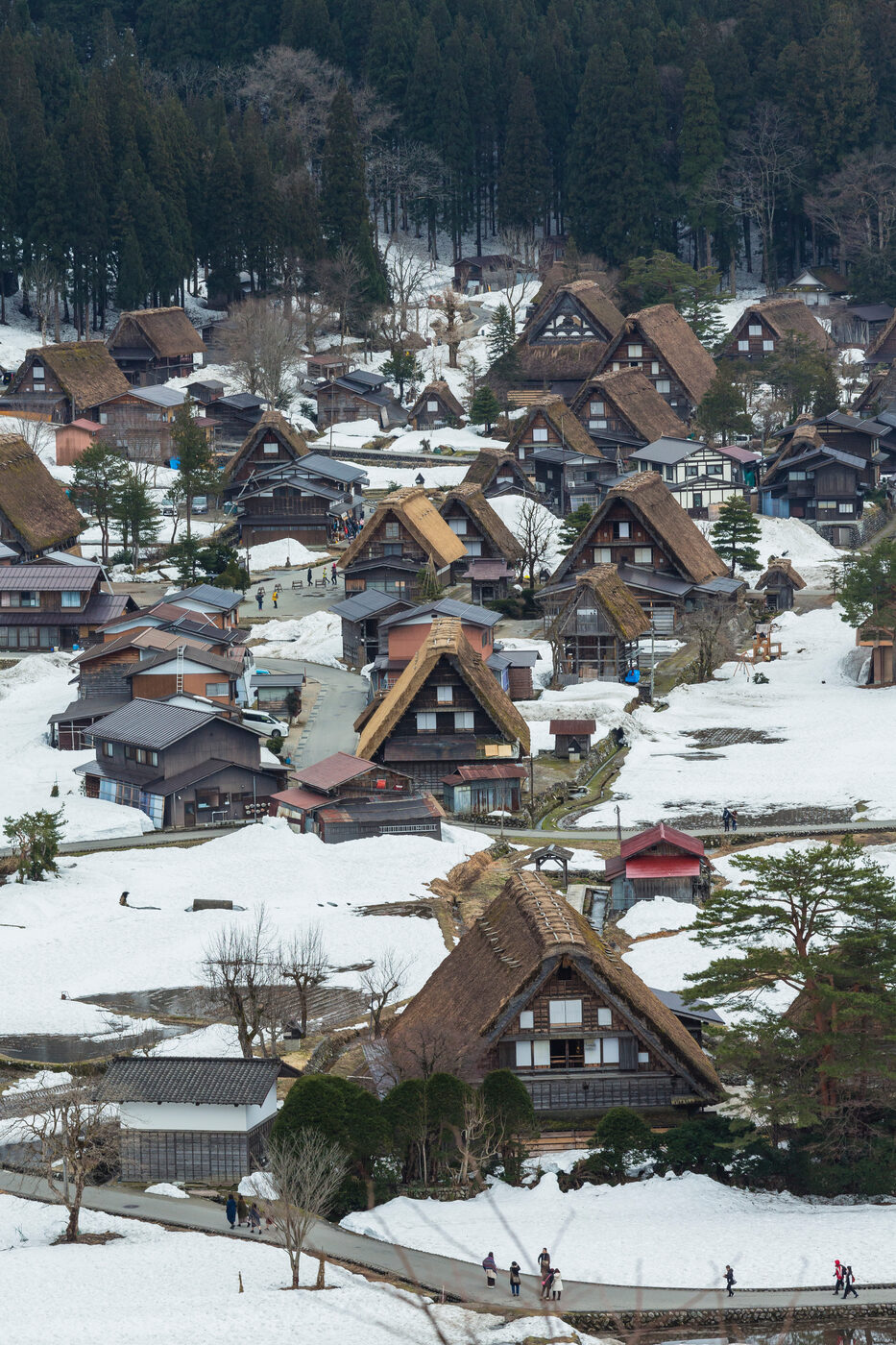
Asakusa: old Tokyo, one lane at a time
This is where the atmosphere of old Japan feels strongest in Tokyo.
Asakusa is one of Tokyo's oldest neighborhoods, with Senso-ji (浅草寺) at its center. Founded in 645, Tokyo's oldest temple draws 30 million visitors a year. If Shibuya and Shinjuku suggest the city's future, Asakusa offers a glimpse of its past.
The temple’s story reaches back further, to 628. Two brothers, Hinokuma Hamanari and Takenari, were fishing in the Sumida River when a small statue of Kannon turned up in their net; the village headman, Haji no Nakatomo, became a monk and turned his home into a temple to house it. Today’s main hall was rebuilt between 1951 and 1958; today Senso-ji is counted among the most visited religious sites in the world. Each year in late spring, the Sanja Matsuri fills the surrounding streets for three to four days.
Kaminarimon and its red lantern
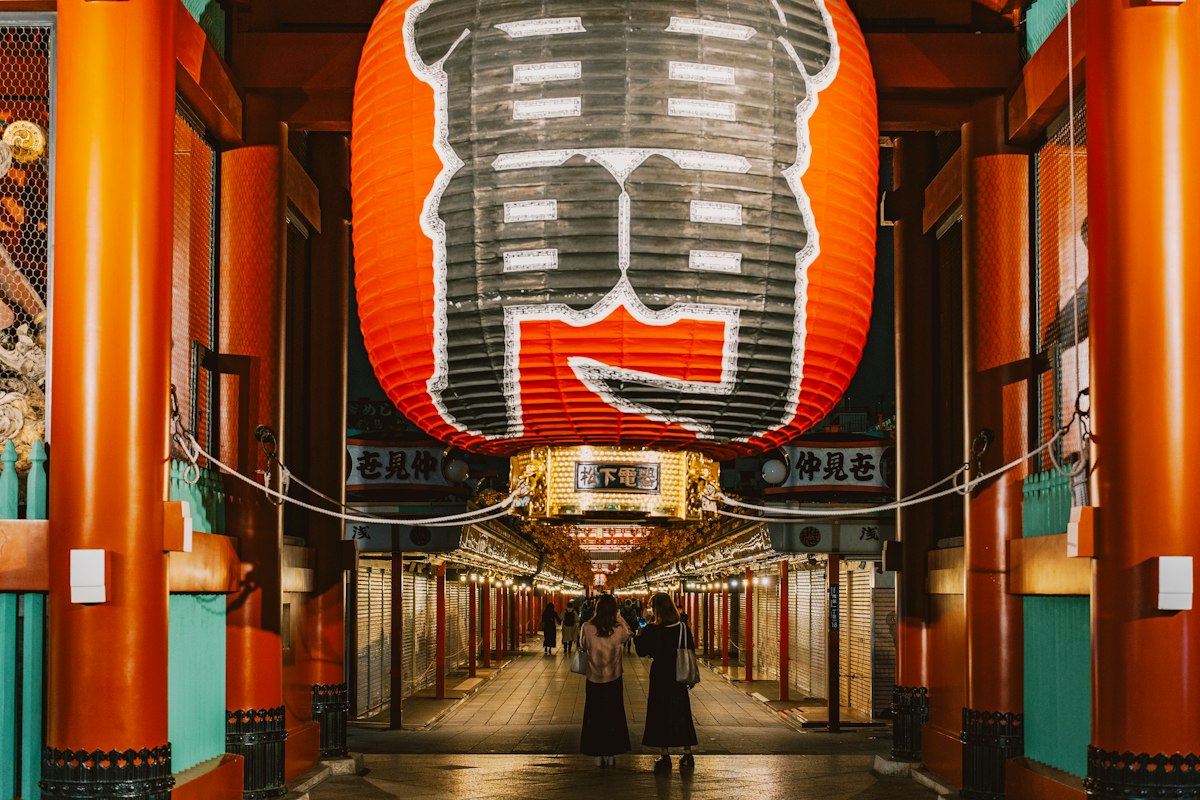
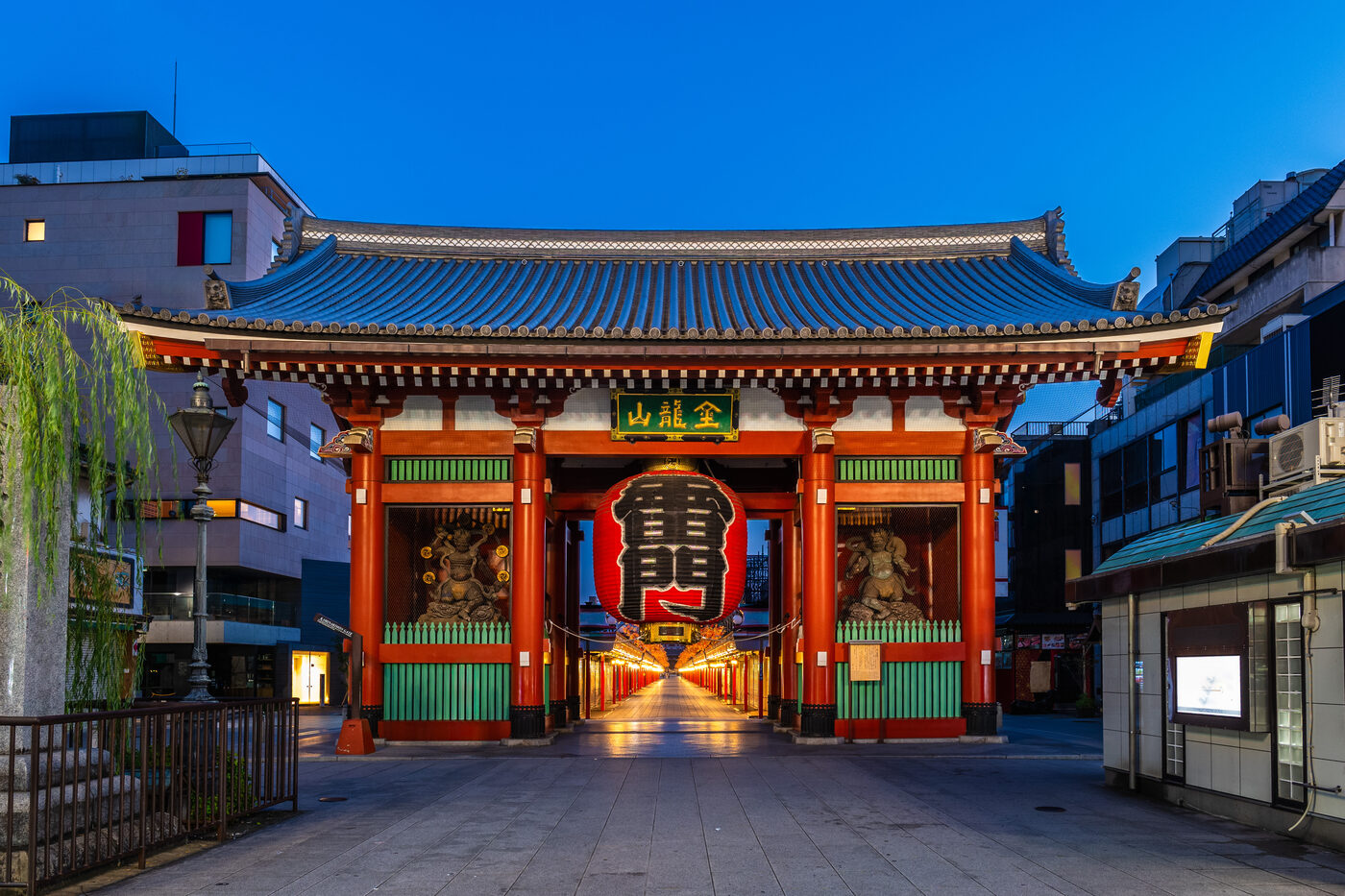
Kaminarimon is Senso-ji's main gate. Its red lantern, suspended between the pillars, is 4m tall and weighs 700kg. The name Kaminarimon (雷門, “Thunder Gate”) comes from the old belief that it protected the temple from lightning and wind. It may look familiar from photos, but stand beneath it and it feels far bigger than you expect. During festivals the lantern can be folded up so that tall floats can pass beneath. Statues of Fujin, god of wind, and Raijin, god of thunder, have guarded the front since the gate moved to this spot in 1635. The gate burned down in 1865, and the gate was missing for nearly a century until 1960, when Panasonic founder Konosuke Matsushita paid for the present 11.7m structure.
Nakamise — 250m of street food
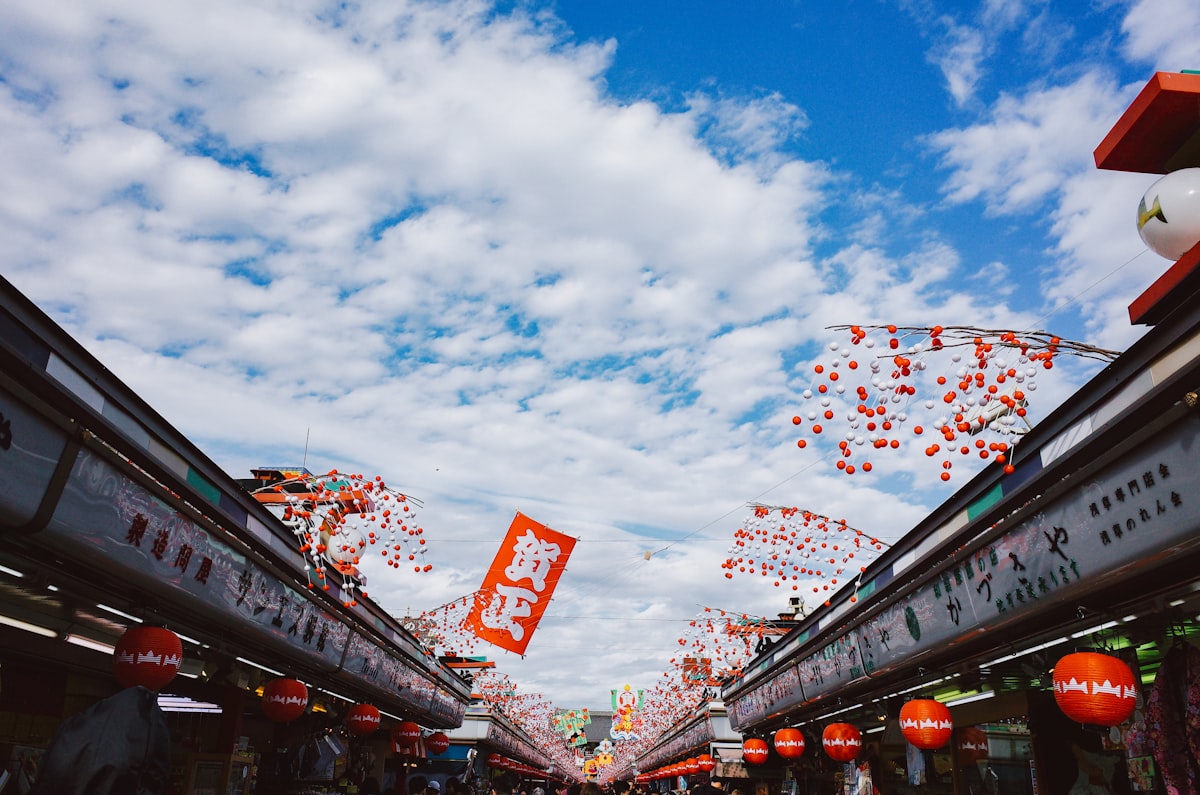
Beyond Kaminarimon, the shopping street runs for 250m, with around 90 stores on either side. Try Japanese street foods in one place: ningyo-yaki, little doll-shaped cakes; melon bread; takoyaki; and wagashi, traditional Japanese sweets.
Hozomon, the main hall, and the pagoda
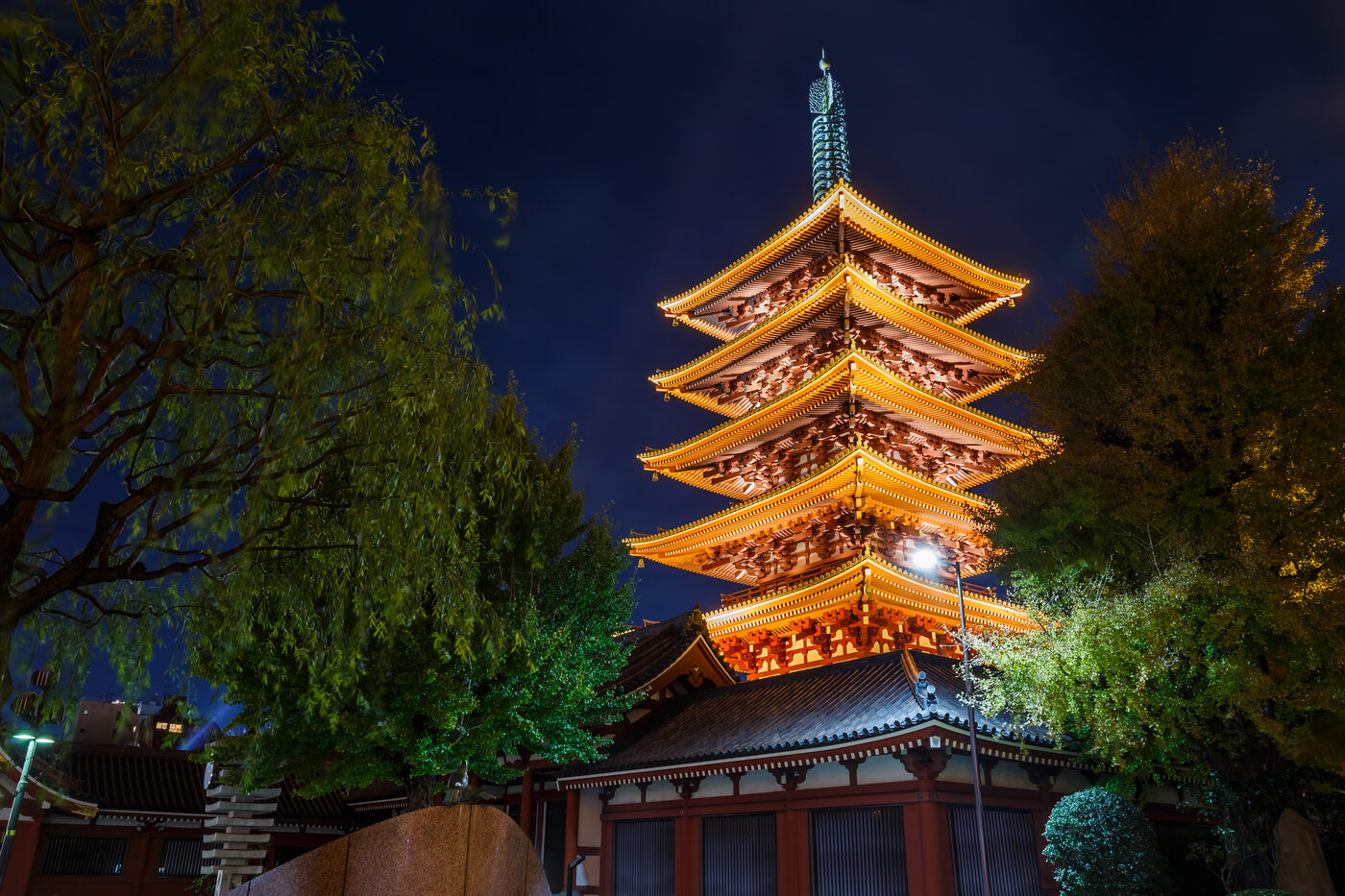
Pass through Hozomon (寶藏門) at the end of Nakamise to reach the main hall. Rebuilt in 1964 with a private donation of ¥150 million, the 22.7m gate keeps temple treasures on its upper floor, including a copy of the Lotus Sutra designated a National Treasure. The golden light inside makes an impression. Buy and light a stick of incense, or senko, then waft the smoke toward your body as a small purification ritual. Beside the hall stands the 53m five-story pagoda, first raised in 942. It burned along with the main hall in the March 1945 air raid on Tokyo, and the present tower was rebuilt in 1973. Lit up at night, it looks like a scene from a movie.
Rent a kimono, take a photo
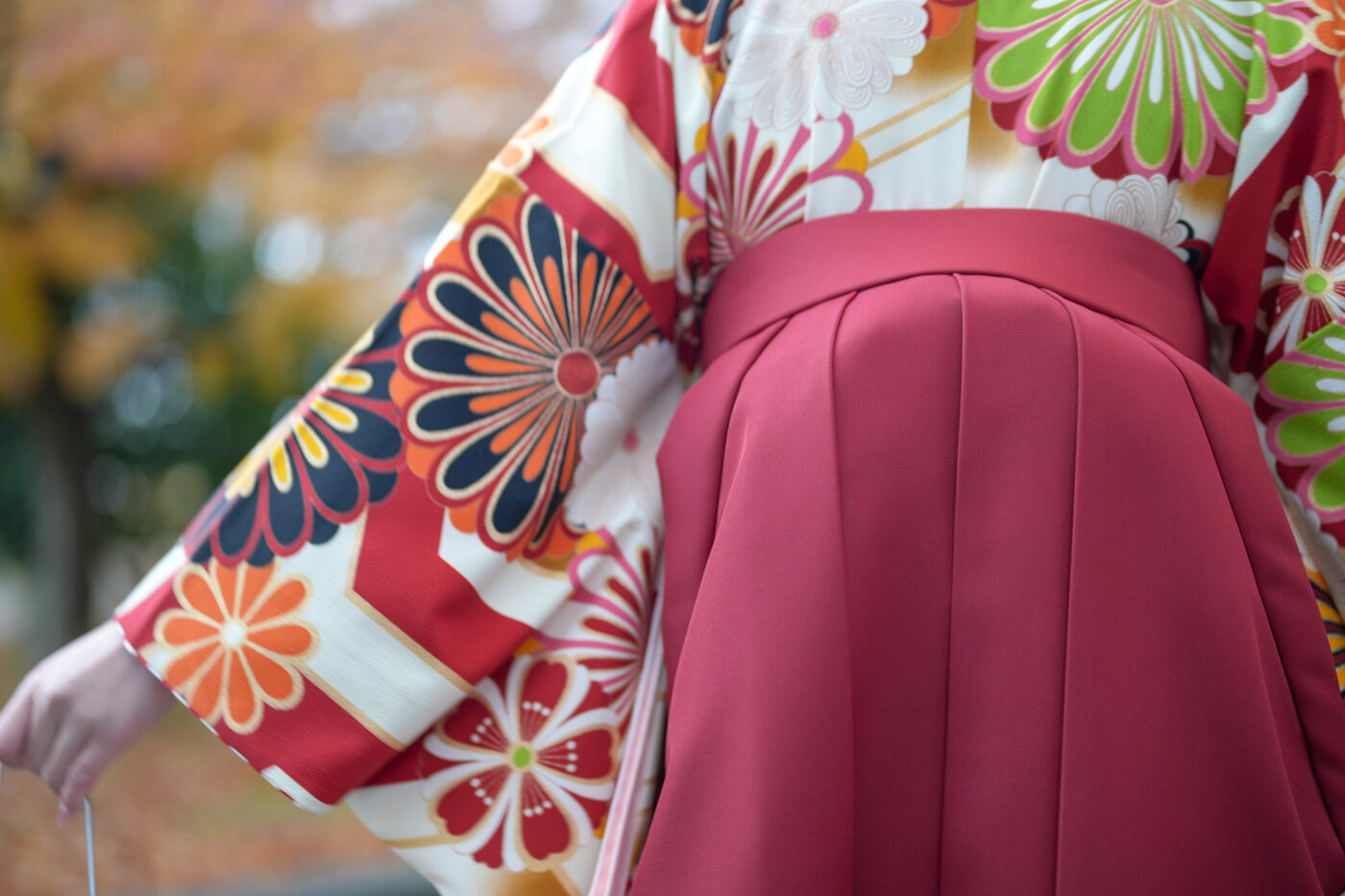
Asakusa has Tokyo's most developed kimono-rental scene. Shops such as Wargo Asakusa, Juju, and Kura charge ¥3,000~5,000, with hairstyling an extra ¥1,500~3,000. You usually rent in the morning and return it by 6 p.m. Wear it to Kaminarimon, Nakamise, and the main hall for photos that need little editing to look like a magazine shoot.
Nearby — Skytree and ukiyo-e
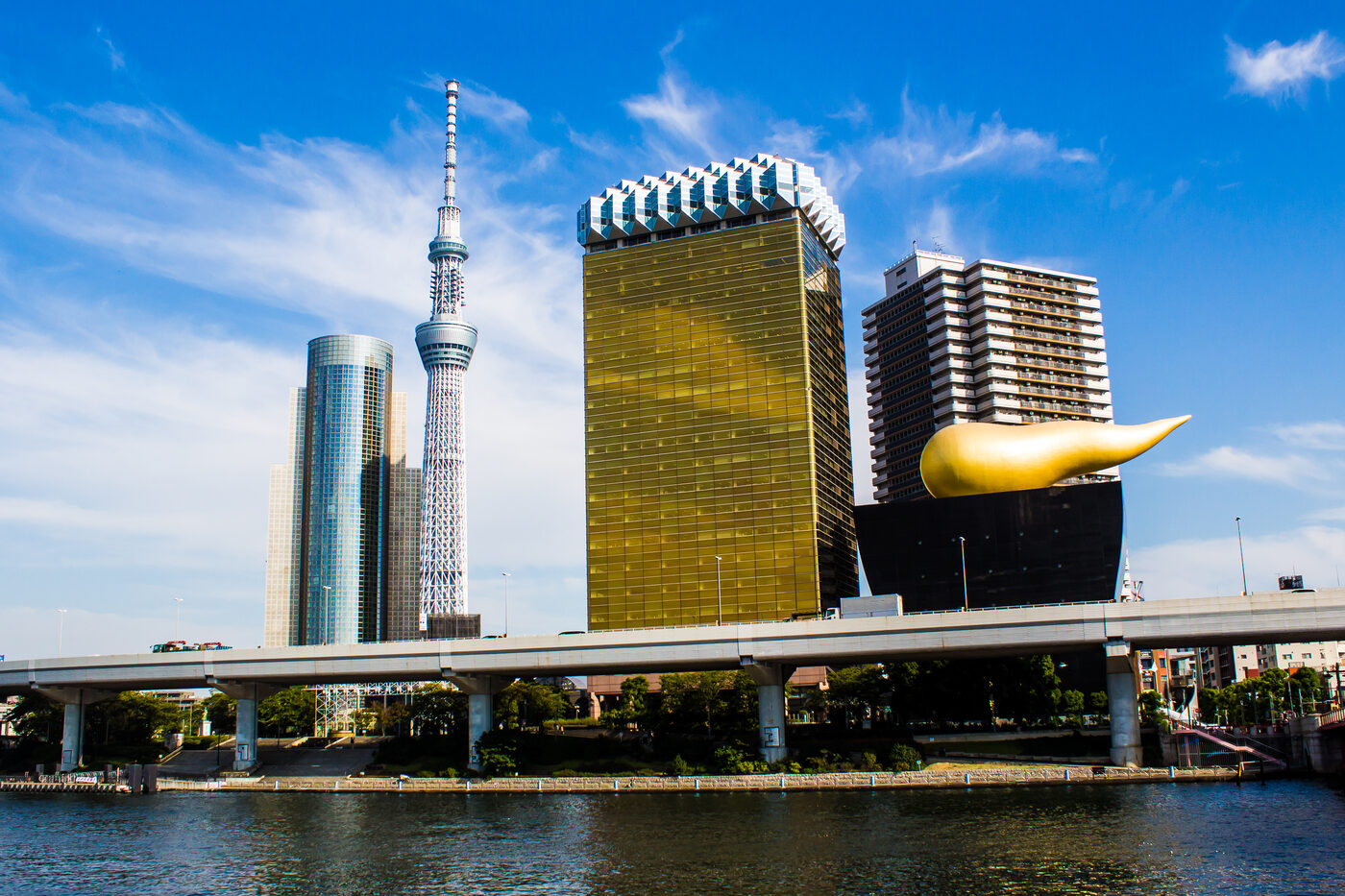
Across the Sumida River beside Senso-ji stands Tokyo Skytree, Japan's tallest at 634m. The view of Senso-ji and Asakusa from above makes a fine photo. Across the Sumida in Ryogoku, the Edo-Tokyo Museum brings the life and art of old Tokyo, ukiyo-e (浮世絵) included, back into view. It reopened on March 31, 2026, after a four-year renovation.
Book
We are not party to bookings. Provider terms govern bookings/payments/refunds. We earn commission on our link bookings.